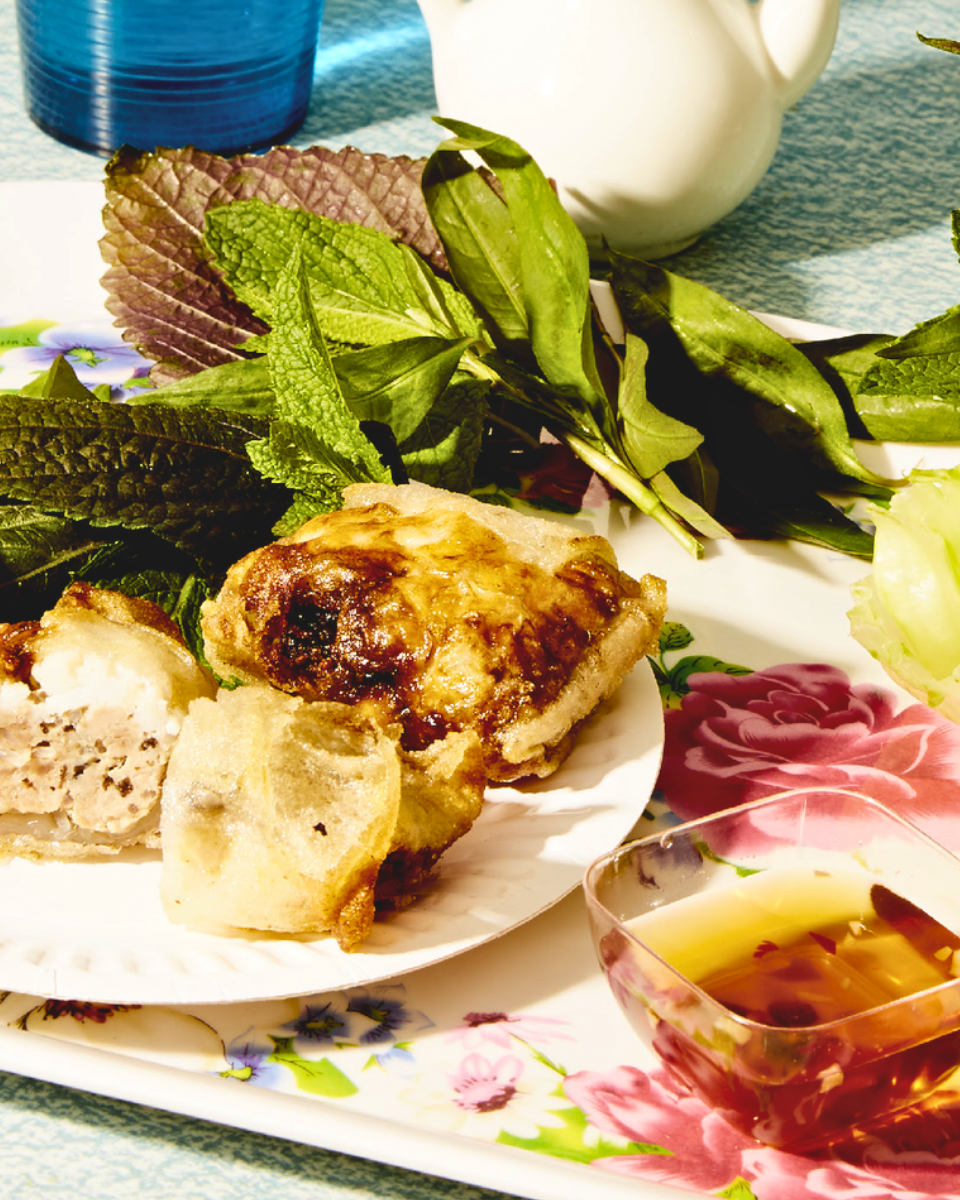
I first ate this dish a few years ago down a laneway in the Old Quarter in Hanoi. The flavours were so simple and delicious with a wonderful crispy texture. I just had to recreate it for my cookbook, Vietnam: Morning to Midnight!
In Vietnam, spring rolls are traditionally made using rice paper instead of the thin pastry that’s often used in other Southeast Asian countries and China. Fried rice paper gives a unique crunch and texture that most Vietnamese people love.
What makes Vietnamese rice paper special
Rice paper forms the base of many Vietnamese dishes. It is used to wrap ingredients and carry flavour and texture: from the rice paper rolls that we all know and love, to accompanying salad plates placed in the centre of the table to wrap herbs, meat and fish.
The rice paper you find in Vietnamese markets is the result of a long, tedious, handmade process. First, the rice is ground to make a flour, which is then transformed into a batter. A thin layer of this batter is then spread over a muslin cloth (cheesecloth), placed on top of a pot of boiling water and steamed for a couple of minutes. The rice paper sheet is then removed and placed on bamboo racks to dry in the sun. Watching someone make this is mesmerising; they move from batter to steamer to bamboo rack with a speed that makes it look easy, but don’t be fooled!
True Vietnamese rice paper sheets are much thinner than what we buy in the supermarket, which are generally thicker and need to be rehydrated in either cold or warm water, depending on their thickness. The rice paper found in Vietnamese markets is usually rehydrated with just a light sponge of water, or moistened with fruits, such as pineapple or star fruit, when placed in the centre of the table as part of a salad.
Ways to use Vietnamese rice paper
I import beautiful thin rice paper from the markets of Vietnam. I love to serve it with whole grilled fish and steaks, as well as accompanying large herb salad plates with pineapple and granny smith apple. Use the fruit to moisten the rice paper before rolling, just like we do in Vietnam.

Crab and Pork Spring Rolls
Ingredients
- 20 medium rice paper sheets
- 2 litres vegetable oil for deep-frying
- Nuoc mam dipping sauce
Crab and Pork Filling
- 500 g minced ground pork
- 2 shallots finely chopped
- 2 garlic cloves minced
- 2 tbsp fish sauce plus extra if needed
- 1 tbsp sugar plus extra if needed
- pinch ground white pepper
- 50 g wood ear mushrooms roughly chopped
- 300 g fresh crab meat
- SALAD PLATE
Salad Plate
- 1 head iceberg lettuce or butter (bibb) lettuce leaves separated
- 1 bunch mint leaves picked
- 1 bunch Vietnamese mint leaves picked
- 1 bunch shiso leaves picked
Instructions
Crab and Pork Filling
- To make the crab and pork filling, place all the ingredients except the crab meat in a large bowl and mix to combine. Check the seasoning by cooking 2 teaspoons of the mixture in a small frying pan over medium heat or in the microwave for 30 seconds. Taste, and add more fish sauce or sugar to the mixture, if necessary, to balance the sweet and salty flavours.
Spring Rolls
- Arrange the lettuce leaves and herbs on a large serving platter. Lightly spray a rice paper sheet with a little water, wiping off any excess liquid.
- Lay the damp rice paper sheet flat on a clean workbench. Spoon about 1 tablespoon of the filling in the centre of the rice paper and top with two teaspoons of the crab meat.
- Fold in all four sides of the rice paper to make a tight square. Repeat with the remaining rice papersheets and filling to make 20 spring rolls.
- Heat the oil in a large saucepan to 180°C (350°F) on a kitchen thermometer. Working in batches, lower a few spring rolls into the oil and cook for 7–10 minutes, until golden and crispy. Remove using a slotted spoon and drain on a plate lined with paper towel.
To Serve
- Serve the spring rolls with the salad plate and nuoc mam. Place a spring oll in a lettuce leaf, top with a few herbs, then wrap it all up and dip in the nuoc mam.