From oceans to continents to cultures, Panama is a place where things converge. And nowhere is that collision more delicious than at the table.
We arrived in Panama City at the tail end of the rainy season, when the air carries the perfume of jasmine, and Casco Antiguo – the old quarter jutting into the Pacific Ocean on its narrow peninsula – glows in the late-afternoon light. Recognized in 1997 as a UNESCO World Heritage Site, it wears its history the way a great restaurant wears its patina: with confidence, without apology.
Where to Eat and Stay in Panama City

Hotel La Compañía opened in 2022 inside what was, from 1688 to 1744, a Jesuit convent. Over nine years of development, owner Chris Lenz has shaped the property into something that feels less like a hotel and more like an act of cultural preservation. 88 rooms are distributed across three wings – Spanish, French, and American – each with its own design, arranged around a central courtyard garden. More than 2,200 archival photographs hang on the walls, and the “Time Machine” elevator – an immersive experience transporting guests through Spanish Colonial, French Colonial and American history between floors.


The hotel’s five restaurants and two bars make it a culinary destination in its own right. We began each morning at El Santuario, the Spanish-inspired dining room where a lavish breakfast buffet of tropical fruit, soft cheeses and warm empanadas is served in a series of stone-walled rooms. One is built over a historic well, visible through a translucent floor. In the evening, we returned for the Paella de Mariscos, a dish of plump, briny clams and saffron rice that arrived at the table fresh and fragrant with the sea.
Dinner was at 1739, the hotel’s French-inspired restaurant named for the year a fire destroyed the original convent. A spiral staircase leads to a wine cellar below, and the menu draws on classical French techniques. Coquilles St. Jacques arrived in their shells, butter pooled and bubbling, followed by fresh local grouper in a light wine sauce. It was the kind of cooking that reminds you why simplicity is a skill.

At the Capella Rooftop bar, we ordered one of their signature cocktails, The Draconis, made with bourbon and pineapple syrup, finished with a theatrical smoke dome. The Naos cocktail followed: mezcal, rum, tropical fruit syrup and a rim of red spicy salt that left a pleasant, slow burn.
Elsewhere on the property, Hari, the hotel’s boldly Mexican restaurant, is designed entirely with custom pieces made from recycled plastic. The hotel also runs a coffee tasting program featuring beans from Panama’s Boquete highlands, including Catuai and the sought-after floral Geisha variety, considered among the best coffees in the world.
But the evening that stayed with us longest was spent at Villa Anna, housed in a 1920s three-storey building a short walk through Casco’s cobblestoned streets. Dining with us was a chef and avid hunter who approached his meals with the seriousness of a scholar. When the restaurant’s signature Duck Trilogy arrived, the conversation stopped. After his first bite, he set down his fork and declared that it was the best duck he had ever tasted.
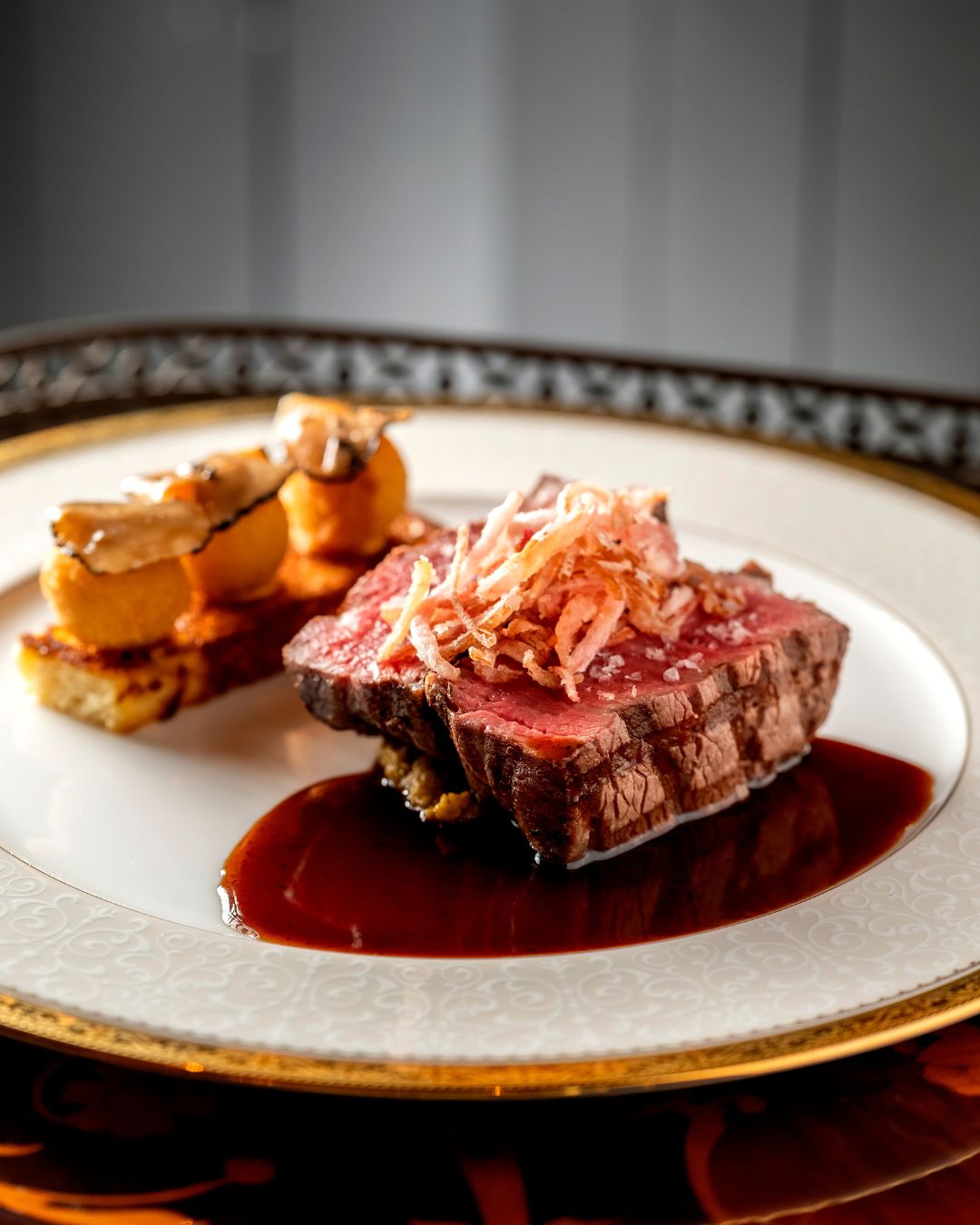
The Wagyu steak and the herb-crusted salmon were equally impressive, and a surprisingly satisfying Gruyère potato tasajo rounded out the meal. After dinner we made our way to the Speakeasy Bar and eventually to the Cigar & Rum Lounge and rooftop terrace, where the city hummed below us and the warm night air carried salt.
El Valle de Antón’s Best Culinary Experiences
From Panama City we drove two hours west and up into the highlands. The air cooled noticeably as we climbed through cloud forest toward El Valle de Antón – a mountain village settled inside the caldera of an ancient, inactive volcano. The crater shapes everything here: the soil, the microclimate, the particular quality of the light. Chris Lenz has built his second property in this landscape, and Hotel La Compañía del Valle has a similar philosophy to its Casco Antiguo sibling – serious art, serious food, serious attention to place.
More than 200 sculptures and original artworks by Panamanian and international artists are displayed throughout the property, each representing one of five natural elements: fire, water, earth, metal and wood. Exploring the grounds feels meditative. Elysium spa, built into the volcano’s crater, is accessed via water-filled tunnels inspired by ancient Roman baths. We emerged loose-limbed and relaxed, ready for dinner.

Restaurant Fuego anchors the property’s culinary identity: grilled dishes elevated by a Chef’s Table menu that unfolds over multiple courses. At Terra, vegetables sourced from the nearby Anton Valley take centre stage. A slow-cooked cauliflower arrived in a complex reduction from its own roasting juices, while handcrafted ravioli filled with mushrooms and fresh herbs arrived in a lemon reduction that tasted like late spring. Chef Patrice Jaymon and the culinary team have taken healthy eating to a whole new level.

Breakfast was served at Tiempo – the hotel’s all-day dining space – inside a glass-walled gazebo suspended over water. Coffee arrived from Boquete, fruit arrived from nearby farms and the morning mist drifted across the crater beyond. We lingered over breakfast, but the gym, pools and pickleball courts were calling.

Santa Catalina’s Growing Food Scene
Santa Catalina sits on Panama’s Pacific coast, a four-hour drive southwest through dry forest and past cattle ranches. Known first for its world-class surfing, it’s drawing a different kind of pilgrim: one who comes for the food.

Catalina’s Hideaway, where we stayed, was built by Anthea Stanley and Ryan Somes, a couple from Toronto who left careers in finance to live on the Pacific coast. They wanted to build something with their hands and bring more balance to their lives while raising their family. The property features a collection of rooms, casitas and treehouses scattered throughout lush grounds. It is organized around a philosophy of sustainability and farm-to-sea-to-table cooking that feels less like a marketing message and more like a way of life. There is an open-air yoga studio, mangrove tours and, at the centre of it all, a restaurant called Sobremesa – named for the Spanish custom of lingering at the table after a meal, in conversation and contentment.

Sobremesa was shaped with the guidance of Brittan Morgan, one of Panama’s most accomplished restaurateurs. The kitchen treats the Pacific coast’s abundance with seriousness: serving fish pulled from nearby waters and produce grown locally. The cooking is confident without being complicated. We ate well. We stayed at the table. We did what the restaurant’s name asked of us.
Santa Catalina deserves a mention of its own. A community of just a few hundred people supports more than 20 restaurants. Along the streets near the beach, we found fresh Pacific seafood grilled over wood, Italian restaurants, Argentine parrillas sending smoke into the air through an open kitchen, Asian fusion served at plastic tables, bakeries turning out good bread and specialty coffee shops pouring single-origin beans. For a town this small, the food culture is remarkably vibrant — a reflection of the locals who have chosen to make this stretch of Panama’s Pacific coast home.
Dining in Style on Taboga Island

On our return to Panama City, we took a 30-minute express ferry (you can also arrange a private boat taxi) to Taboga Island, known as the “Island of Flowers”. With its colourfully painted houses, bougainvillea in full bloom and views of the Pacific, it’s easy to see where it got its nickname. Our destination was Villa Caprichosa, an eight-room boutique property owned and designed by Diane Burn, where thoughtful details – from the furnishings to the ocean-facing private pools — reflect her background in design.

The dining room at Villa Caprichosa is called La Dolce Vita, and the name – Italian for the sweet life – captures the kitchen’s approach. Mediterranean and Italian influences combine with local ingredients and flavours. Two chefs share the kitchen. Chef Enrique “Kiki” Perez has been cooking with the island’s indigenous ingredients since 2010, while Chef Rodrigo Jaramillo brings a contemporary approach. Together, they create dishes that feel rooted in place and thoughtfully refined.

The result is a menu that feels both local and international: a tuna tartare made with fish caught that morning, a bright ceviche alive with acid and heat, an elegant tuna salad and patacones – twice-fried green plantain rounds – topped with ribbons of smoked salmon. We ate on the terrace as the sun set over the Pacific and the island grew quiet around us. It is the particular pleasure of Taboga: a romantic place where life slows down, meals are allowed to linger and evenings are unhurried.
Why Panama is a Culinary Destination Worth Discovering

While many travellers first discover Panama through Copa Airlines’ popular stopover program, the country deserves far more than a brief layover. From Panama City’s historic Casco Antiguo and the volcanic crater of El Valle de Antón to the beaches and surf towns of the Pacific coast, the country has an extraordinary range of experiences. Combined with a world-class culinary scene, luxury hotels and easy access from North America, Panama is a must-visit destination for food-focused travellers.