Sansonina winery takes its name from the biblical hero Samson, a symbol of strength, softened by the Italian suffix -ina, a term of endearment. “I think it’s appropriate,” says Nadia Zenato, reflecting on the name she and her mother, Carla Prospero Zenato, chose when they acquired the winery in the mid-1990s.
Located in Peschiera del Garda, on the Veneto side of Lugana, Sansonina sits squarely within the production zone of Trebbiano di Lugana, one of northern Italy’s most popular white wines. From the outset, Prospero Zenato made a visionary choice, focusing on artisanal red wine instead. At the time, Sansonina was the only vineyard in the area planted to old-vine Merlot — a rare and highly prized presence in the zone.
The Sansonina Merlot soon became a defining project for mother and daughter. Made entirely from Merlot, the wine reflects a hands-on, thoughtful approach and a clear sense of identity — a refined “Little Samson,” as its name suggests. Ruby red in colour, it offers concentrated notes of black cherry, cocoa, and dried herbs, combining depth with elegance.
Still, Trebbiano di Lugana has always remained central to Sansonina’s DNA. When Prospero Zenato and her late spouse, Sergio, founded Zenato winery in 1960, they were early champions of the varietal — a legacy that continues to shape the family’s approach.
When Nadia Zenato began working alongside her mother at Sansonina — while also overseeing the family’s original winery — she carried forward that same spirit of determination and innovation. Her creative focus turned once again to Trebbiano di Lugana, leading to one of the estate’s most intriguing projects: Sansonina in Laguna. “We wanted to explore new frontiers, joining our land with the regenerating force of the sea,” she says.
What truly sets this wine apart is its underwater ageing. After bottling, just 100 magnums were submerged for sixteen months in the southern part of the Venetian Lagoon, an area known for its calm waters and steady circulation. Immersed in December 2023 and retrieved in April 2025, the bottles rested at a depth of six to eight metres, secured in groups with nautical rope.

This unique environment — shaped by thermal variation, water movement and a saline microclimate — encourages a slow, graceful evolution. Mineral and marine nuances are amplified, while freshness is carefully preserved. “The water’s constant temperature and movement help the wine age slowly and gracefully,” says Zenato.
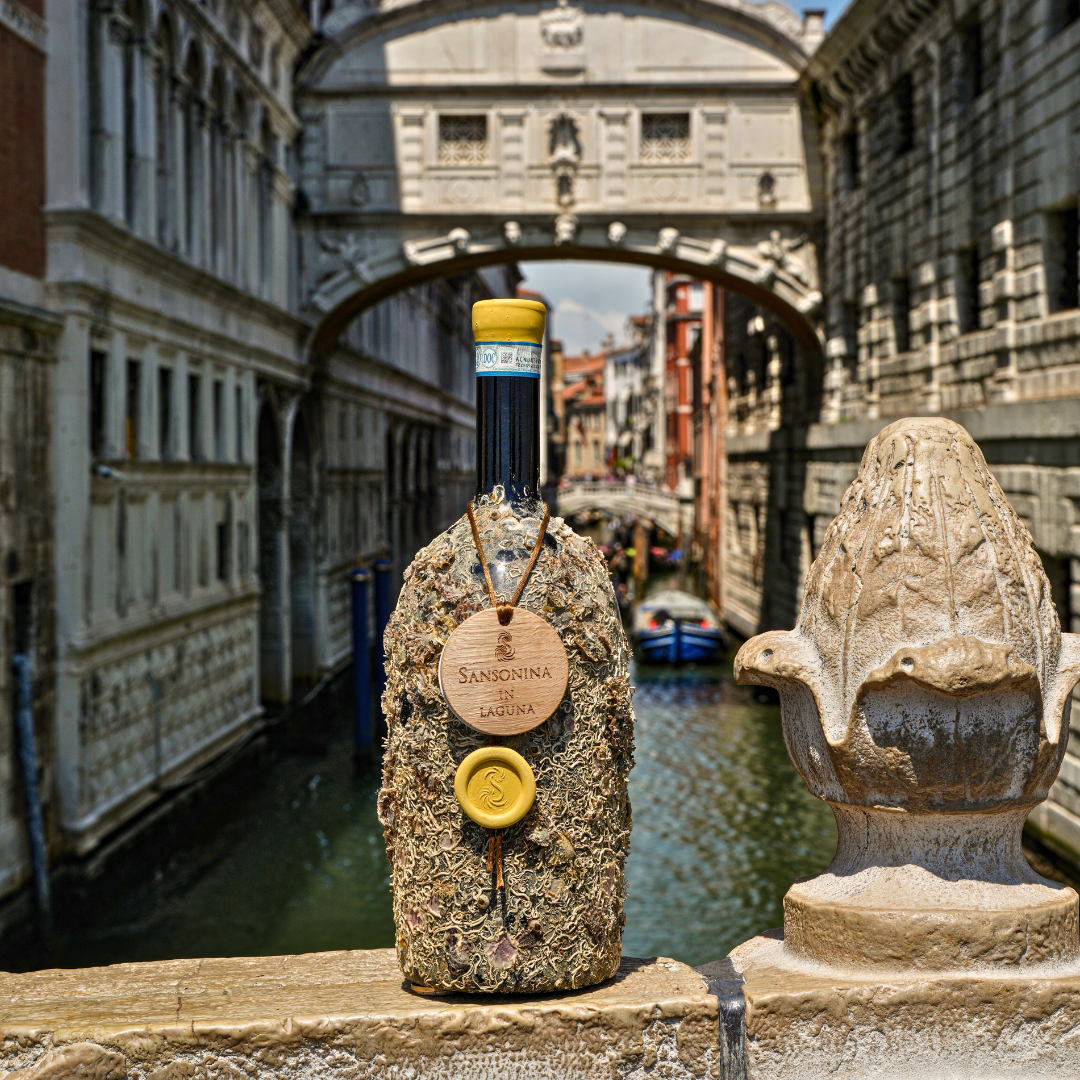
When the bottles were finally lifted from the lagoon after 16 months underwater, each emerged encrusted with barnacles and seaweed – a striking reminder of their time in the depths of the lagoon. But it’s what’s inside the bottle that’s even more captivating: On the nose, the wine shows a complex, saline profile, while the finish is long, mineral and refined.
The magnums are housed in a handcrafted oak case made from the same wood traditionally used for Venice’s bricole, the pilings that support the city above the water. The carved surface evokes the movement of waves, while a wax seal by the Bortoletti Artistic Foundry of Venice completes the presentation, underscoring the wine’s artisanal spirit and connection to place.

Lugana DOC “Spontaneous Fermentation” 2021
Produced in Peschiera del Garda, in the locality of Sansonina, this Lugana DOC is a small-production, artisanal expression of the appellation, made primarily from Trebbiano di Lugana grown on clay-rich soils near Lake Garda. Bottled exclusively in 100 magnums, the wine reflects both traditional viticulture and an experimental approach to ageing.
The vineyard
The vineyards are trained using the Guyot system, with a planting density of approximately 3,500 vines per hectare. Many of the vines are over 50 years old, their deep root systems contributing to low yields (around 8,000 kg per hectare) and heightened concentration. The result is fruit with notable aromatic complexity and a strong sense of place — a hallmark of well-farmed Lugana.
Winemaking
The wine is composed of 90% Trebbiano di Lugana, with the remaining 10% drawn from other native varieties. Fermentation occurs spontaneously, without the use of selected yeasts, allowing indigenous microorganisms to shape the wine’s character. Ageing takes place primarily in stainless steel on the lees, preserving freshness and purity, with around 10% matured in new barriques to add subtle texture and depth.
Tasting notes
In the glass, the 2021 Lugana shows a brilliant colour with golden highlights. The nose is layered and saline, with notes of ripe fruit, aromatic herbs, and subtle marine accents. On the palate, it is generous yet vibrant, with a pronounced savouriness that echoes its time beneath the lagoon. The finish is long, mineral, and refined, offering a clear expression of terroir with an evocative maritime character.
“It was a secret experiment first,” says Zenato. “When we saw the results, we decided to continue.” Seen in this context, the cuvée feels less like an isolated experiment and more like a natural expression of Sansonina’s way of working. The winery has always balanced respect for what came before with a willingness to explore — whether that meant planting Merlot where others wouldn’t, or returning to Trebbiano di Lugana with fresh eyes and a sense of curiosity. This wine, shaped by both land and lagoon, reflects that same spirit: grounded, thoughtful and quietly ambitious.
While Sansonina’s lagoon-aged bottling remains an experimental, limited release, the sensory philosophy it reveals is easier to explore in wines that are more widely available. One excellent example is the Zenato Sansonina Merlot, crafted with the same commitment to place and balance and currently available in North America. Other approachable introductions to the region’s style include bottles like Zenato Ripassa Valpolicella, each offering a different window into Veneto’s rich wine culture.
Explore more features about women shaping the world of wine and spirits
Canadian Women Trailblazers in Wine and Spirits — A celebration of women who are redefining Canada’s beverage culture through creativity, courage and craft.
Women Natural Winemakers — A look at female producers embracing natural fermentation, minimal intervention and expressive, terroir-driven wines.
Women Winemakers and Distillers in Nova Scotia — Stories of women in the Maritimes carving out space in both wine and spirits, blending tradition with innovation.