
Cider has been typecast for years—pigeonholed as sweet, fizzy, and only for patio season. But talk to Ontario cider makers, walk through an apple orchard at harvest, or sip a bottle-fermented, bone-dry blend, and the story changes fast. In Ontario, cider-making is an agricultural craft. It’s terroir, technique, and tradition poured into every glass.
With Ontario Cider Week (September 19–26) putting the spotlight on local producers, it’s the perfect moment to explore what cider really is. Whether you love dry cider, fruit cider, hopped cider, perry, or barrel-aged styles, Ontario cider has a story worth tasting.
Cider isn’t just sweet, seasonal, or secondary. It’s craftsmanship in a glass—rooted in orchards, families, and terroir. Whether you’re pouring a sparkling brut with friends, sipping a still cider alongside dinner, or warming up with a spiced glass in winter, cider fits every season and every table.

5 myths about cider that don’t hold up
Myth 1: “All ciders are sugary sweet.”
That first cider you tried was probably sweet and fizzy—more alcopop than artisanal. But Ontario cider is far more nuanced. Styles here stretch from bone-dry and crisp to softly off-dry, with textures that can be lean and mineral-driven or plush and creamy.
At the Ontario Cider Competition, cider is split into four categories:
- Modern Cider – 100% Ontario apples, fresh and fruit-driven, with a touch of natural sweetness or bone-dry edge.
- Hopped Cider – apples infused with hops for a craft beer-like aroma but with cider’s crisp backbone.
- Specialty Cider – fruit ciders with added berries or botanicals, or barrel-aged for depth and spice.
- Heritage/Traditional Cider – made with bittersweet or bittersharp heritage apples, often using wild fermentation, yielding complexity, tannins, and acidity.
This framework shows just how diverse cider really is. Ontario cidermakers choose apples the way winemakers choose grapes: McIntosh and Northern Spy for brightness, Kingston Black and Dabinett for structure, and heritage varieties for tannins and depth. And since cider is made from fruit, not grain, it’s always gluten-free.
Pro tip: if you’re chasing something crisp and bone-dry, look for “extra brut” or “traditional method” on the label. If you’re after savoury edges or richer texture, ask about oak aging or bittersweet-heavy blends.
Myth 2: “Cider is more like beer than wine.”
Cider often shares shelf space with beer, which can make it seem like the two are cousins. But really, cider sits much closer to wine. Both are fermented fruit juice, shaped by vintage, variety, and terroir. The Great Lakes climate that Ontario winemakers celebrate for cool-climate grapes also shapes apples, giving Ontario ciders their lively acidity and clean finish.
Bittersweet and bittersharp apples bring tannins and acidity; dessert apples like McIntosh and Gala add juiciness; and heritage apples such as Northern Spy or Roxbury Russet contribute complexity and spice. Together, they create bottles with as much dimension as a fine white wine. Think of cider as the sparkling relative of aromatic whites or grower Champagne: best enjoyed cool (but not ice-cold), swirled, sniffed, and paired with food.
Myth 3: “Cider is just made with grocery-store apples.”
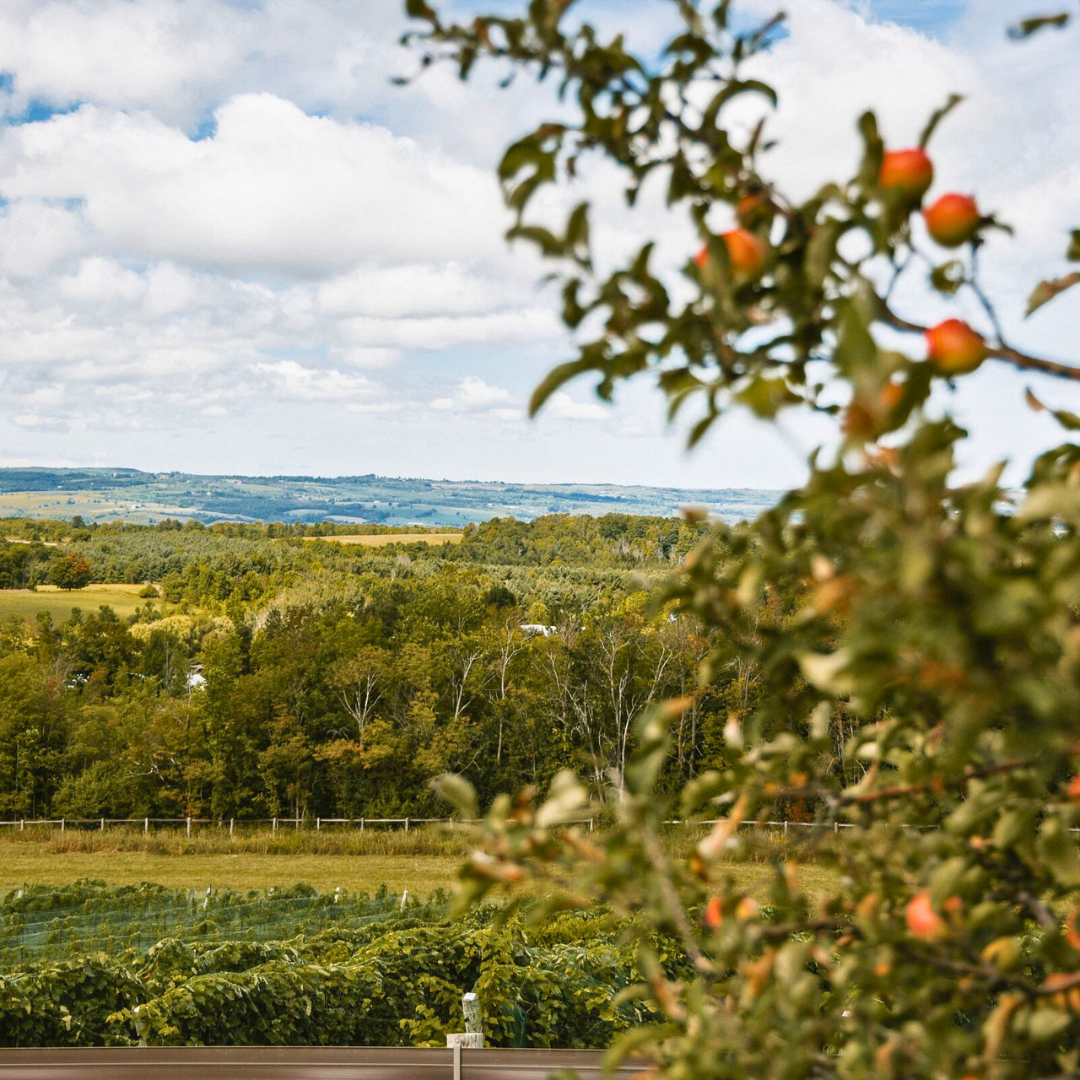
Not so. While varieties like Granny Smith or Honeycrisp sometimes make an appearance, true cidermaking often calls for apples you’d never find in a supermarket. Heritage and cider-specific apples like Dabinett, Yarlington Mill, or Kingston Black aren’t grown for eating. Raw, they can taste sharp, tannic, even unpleasant. But ferment them, and they transform into complex, structured cider.
And cider isn’t limited to apples alone. Pear cider—better known as perry—has a deep tradition of its own, and Ontario cider makers also play with peaches, cherries, and berries for seasonal blends. With around 16,000 acres of orchards hugging Ontario’s lakeshores, there’s no shortage of fruit to experiment with, and that diversity is what gives Ontario cider its backbone.
Myth 4: “Cider is just for summer.”
Yes, a cold can of cider on a patio is refreshing, but cider is built for all seasons. Cider pairs beautifully year-round
- Fall: dry or lightly sparkling ciders with roast squash, mushroom risotto, or pork with crispy skin.
- Winter: mulled cider, warmed with cloves and citrus peel, by the fire.
- Spring: floral, slightly sweet ciders that pair beautifully with asparagus or fresh goat cheese.
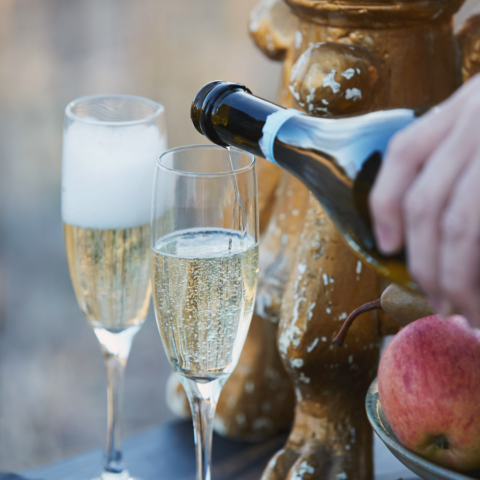
- Summer: of course cider belongs on the patio—but go beyond the can. A bottle-conditioned brut cider poured into flutes at a BBQ is as festive as Champagne with grilled shrimp or buttery corn.
With styles ranging from bright and fruit-forward to barrel-aged and savoury, cider has the flexibility to move from appetizer to dessert without missing a beat.
Myth 5: “Ontario cider is niche, not world-class.”
It’s time to retire this myth for good. Ontario cider is absolutely world-class. The Drink ON Apples™ mark guarantees that a bottle is made with 100% Ontario-grown apples, supporting local growers and ensuring authenticity. Backed by the Ontario Ministry of Agriculture, Food and Agribusiness, the badge is more than a logo—it’s a promise of quality and independence.
Ontario’s cider tradition runs deep, with roots back to the 17th century when settlers first planted orchards. Today, more than 60 cideries—from Niagara to Prince Edward County to Georgian Bay—are carrying that tradition forward, using modern tools and old-world apples to create a truly distinctive regional style. These are makers who see cider as heritage and as future, crafting bottles that belong on any world stage.
How to Explore Ontario Cider
Ontario Cider Week is your annual excuse to taste widely, visit cideries, and explore orchard events. But the joy doesn’t end when the week does. Ontario cideries open their doors year-round, ready to pour flights, walk you through orchards, and share the stories behind every apple. The Ontario Cider Trail is your roadmap, connecting producers across the province from Niagara to Collingwood to Prince Edward County.
Ontario cider is dry, complex, versatile, and absolutely world-class. Next time you’re browsing shelves or planning a weekend trip, look for the Drink ON Apples™ mark and let curiosity guide you. You just might discover your new favourite bottle hiding in plain sight.