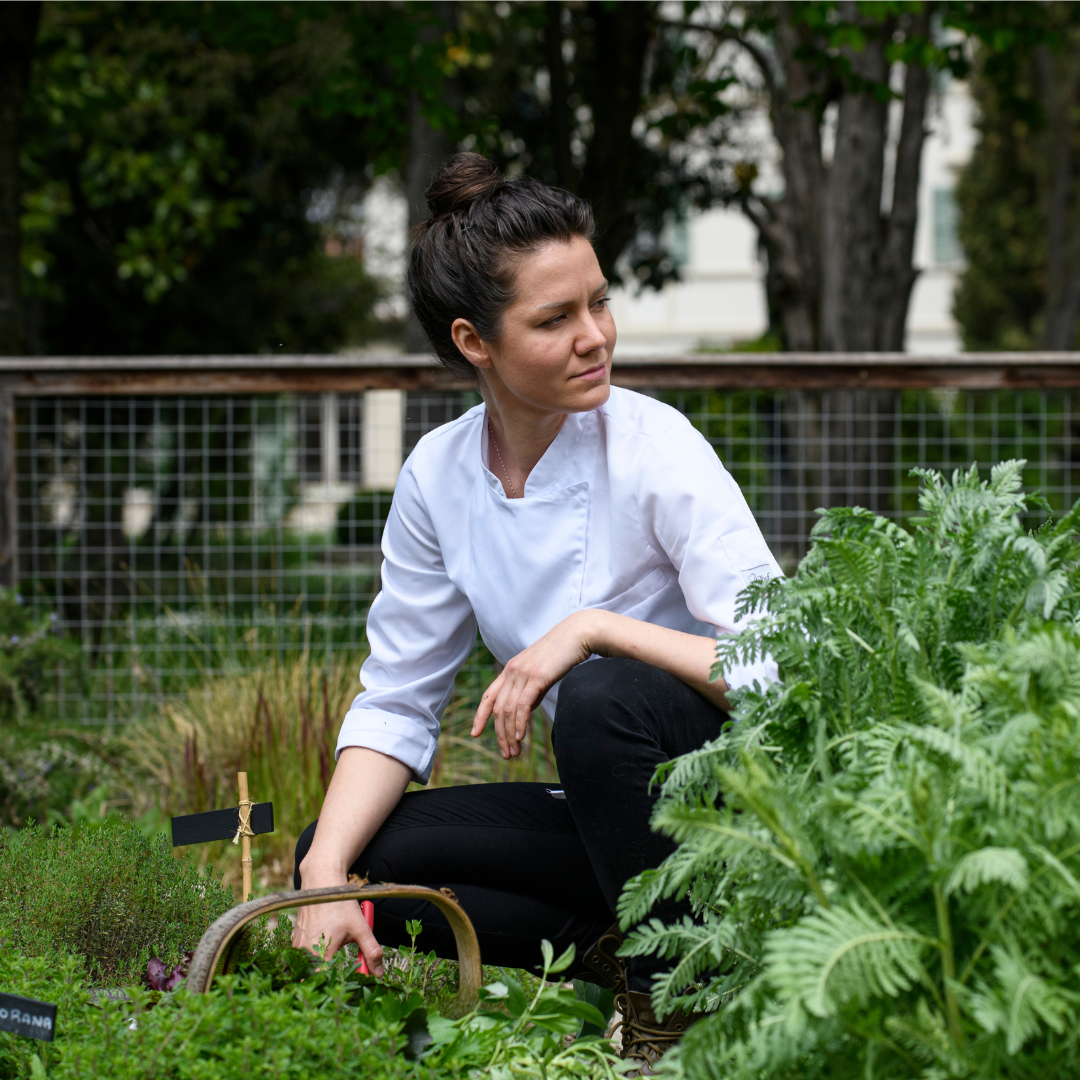
If you walk down a particular narrow cobblestone alley in Modena, Italy, you’ll find a group of brilliant women working away at one of 2024’s most-talked-about restaurants. Despite its setting, however, you won’t find deep bowls of pasta here. Rather, it offers vibrant international dishes inspired by the very women in the kitchen.
Roots is half the brainchild of Montreal-born chef extraordinaire Jessica Rosval. In 2021, she was named Le Guide de L’Espresso’s Female Chef of the Year, and is now a long-time collaborator of famed Italian restaurateur Massimo Bottura. Naturally, the food is delicious. But Roots’ primary goal is to be a place where migrant women can gain the skills and experience required to work in the industry.
Roots: The Non-Profit Restaurant Supporting Migrant Women

The spot opened just over three years ago, having sprouted from Rosval’s friendship with her now co-founder, Caroline Caporossi. The two would sit around and chat about everything. That included the news of the day to feminist issues that nagged at them to big ideas for the future.
When the pandemic stopped their dream of creating a cooking class for newcomers, the duo wasn’t content to just sit around. They launched their non-profit Association for the Integration of Women (AIW).
They started with a sewing workshop making face masks for the community. At the same time, they were still working away on their plan for what would eventually become Roots. As Rosval recounts the story, she speaks thoughtfully, her passion causing her sentences to blend into each other. It’s evident that Roots came from that same fervour.
“When we finally did open the doors, we just looked at each other like, ‘I cannot believe we pulled this off,’” Rosval says. She adds that the delay actually helped them form relationships that were essential to getting Roots off the ground.
“We were talking about giving back to our community during a time when everybody was kind of looking to help their neighbours. It was a time of great success—not just our own personal success but success for the entire community of Modena, who pulled together because they really believed in this project.”
Award-Winning Initiative: Building Practical Skills In the Food Industry

The goal of Roots is simple, if grand. There are fewer than 300,000 people living in Modena, but Rosval says that 143 nationalities are represented. AIW’s research shows that migrant women, especially those between 25 and 35 years old, face the most barriers when trying to adjust to their new home economically and socially.
By teaching them how to work in a professional kitchen, AIW connects them with a community, equips them with skills to find jobs (and financial security) and helps keep an understaffed industry going.
Local social services, job-search agencies and past participants refer women to the organization. Those accepted into the four-month paid training program take classes and learn on the job in the kitchen at Roots. The classes are focused on culinary and general employment skills, like how to read a paycheque or find out about workers’ rights.
After their time is up, AIW helps place them at new jobs while bringing in the next group of women. Rosval says that by the end of 2024, 50 women will have graduated from the program. She adds that 95 percent of their “students” have gone on to find full-time work in the restaurant industry. For Roots, Rosval and Caporossi won the Champions of Change Award at last year’s The World’s 50 Best Restaurants ceremony.
An Ever-Changing Global Menu

The menu at Roots also drives its success. It changes with every group of women that comes into the kitchen. They all offer riffs on the dishes from their cultures while using local ingredients. For example, last summer’s menu was built around cuisine from Ghana, Morocco and Turkey. Rosval isn’t concerned with teaching the women how to cook classic Italian fare and assimilate into their new environment. She wants them to learn technique and to use food to find their voice.
“You could teach [anyone] recipes—I’m interested in teaching what it’s like to live the life of a cook,” she says. “The magic of this restaurant—and we take it very seriously—is the idea that integration is a two-way street.”
“It’s already very hard to leave your country, your family, your culture—you can quickly lose a piece of yourself. We want to help people adapt to the working culture in Modena, but at the same time we want Italians to come to Roots and, through our dishes, discover the beauty of diversity that exists in the city today,” Rosval says.
Jessica Rosval’s Journey Through Legendary Restaurants

For Rosval, Roots is a place where food, connection, nourishment and empowerment all come together. It’s also no coincidence that those four things have been pillars of her decades-long career. For in-the-know foodies, the chef’s story is basically legend at this point. She fell in love with the industry when she got a hostess job at 15 at a local family-style Italian spot in Montreal.
“I was looking for my path, and being in that ambience, feeling that camaraderie of the people there and realizing that I could create moments around a table for people really changed me,” she says. She went to culinary school in the city and went on to work with Laurent Godbout at Chez L’Épicier. Afterwards, Rosval worked with the award-winning Melissa Craig at Bearfoot Bistro in Whistler, B.C.. (In the Globe & Mail, Craig called Rosval “the best sous chef [she has] ever had.”)
In 2013, Rosval and her then boyfriend moved to Milan. Not long after, they celebrated her 28th birthday at Bottura’s now three-Michelin-starred Modena restaurant, Osteria Francescana. It has claimed the top spot on The World’s 50 Best Restaurants list twice and holds Best of the Best status. The Canadian was already a fan of the Italian culinary star and even met him that night. They hit it off so well that he offered to help her find work in Milan.
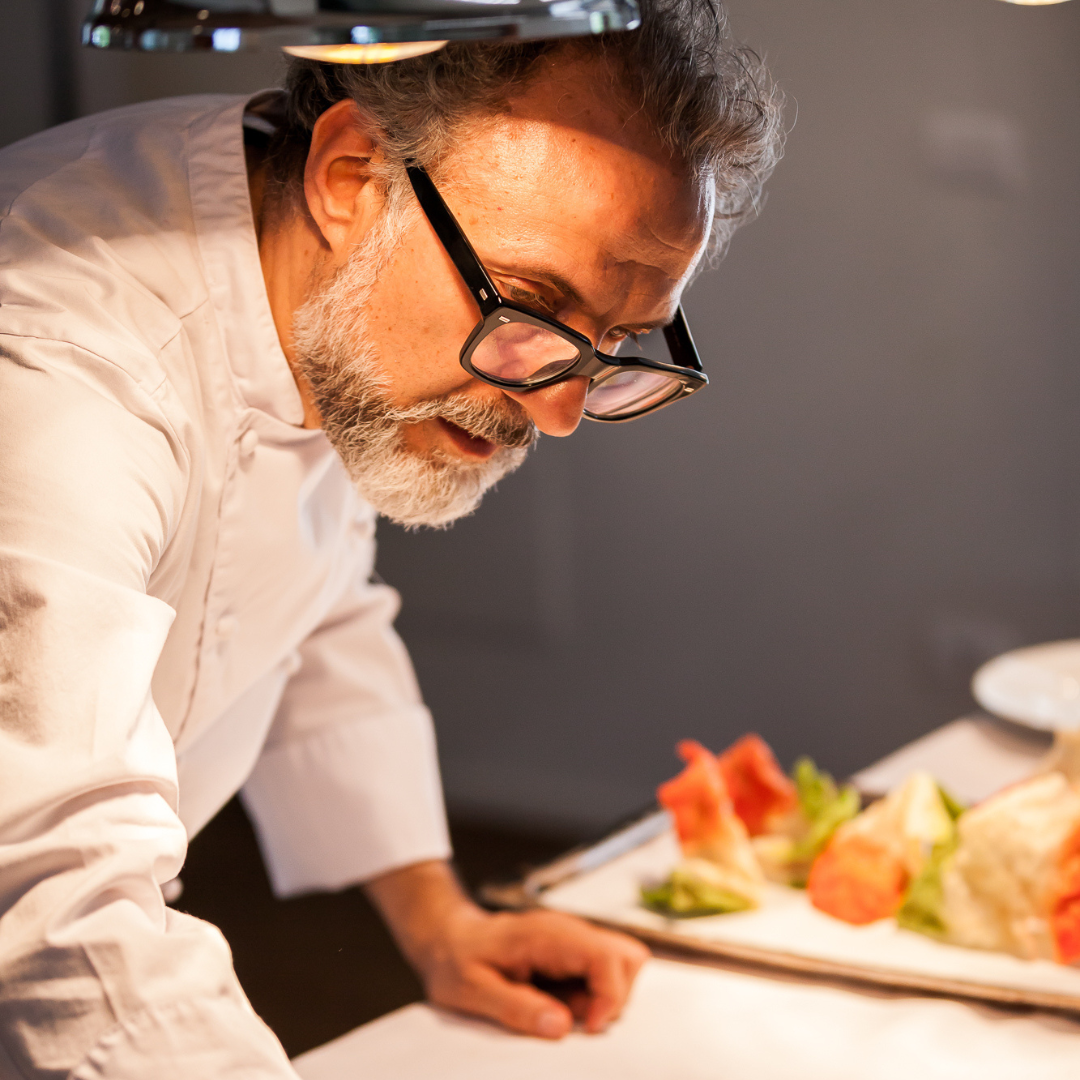
But as they were leaving that night, Rosval came across a sign in the town square. It read: “Just find the courage. The best part of the journey is tomorrow.” She took that as a figurative sign and emailed Bottura the next day declaring she wanted to work for him. He agreed to a trial, and they’ve been working together ever since.
Over the next 10-plus years, Rosval climbed the ranks to chef de partie at Osteria Francescana. She then became chef de cuisine at Casa Maria Luigia. It’s an intimate country house that Bottura and his wife, restaurateur/author Lara Gilmore, opened in 2019.
“Bottura and Gilmore are two people I admire very much. They believe in new ideas and we build them together, with our team and our passion,” Rosval says. “That attitude is something that has nurtured [me] and our projects. We know that when we do things to the best of our ability, to the level of perfection that we represent, we can feel comfortable. And we have fun doing it.”
Building the Menu At Michelin-Awarded Casa Maria Luigia

Casa Maria Luigia boasts three Michelin keys. There, Rosval oversees the all-day kitchen, the popular breakfasts and the dinner menu that revitalizes bygone Osteria Francescana favourites.
There’s also the property’s recently opened Al Gatto Verde, where she serves up a menu of wood-fired dishes. They include tortellini au gratin with 36-month-aged Parmigiano Reggiano and Montreal lamb cooked on a spit. You won’t be surprised to discover that the restaurant has also earned a Michelin star too.
But Rosval will be the first to tell you that it’s not just the food that has brought these ventures success and made her journey so special. It’s the people. Just like at Roots, she views it her responsibility to help those around her become the best version of themselves.
“I walk into the kitchen every single day and I just want to be there, to be with my team, know what’s going on and joke around with them,” she says. “We take our jobs very seriously—we cook at very high levels—but I am so invested in the people I work with. It’s my job, as their chef, to give them everything I’ve learned over the last two decades of cooking. It’s my job to help them achieve the goals they’ve set for themselves.”
Whether she’s at Roots or the acclaimed restaurants she leads, Rosval believes that the professional kitchen is a place where people deserve to be nurtured. Not berated or taken for granted.
“We can all create better working environments and better kitchens,” she says. “It’s important to never forget that human aspect. Being a chef isn’t just about being the boss. It’s not about being scary. You don’t motivate people by insulting them—you motivate them by letting them know they’re an important part of the job no matter what they’re doing and that they’re valuable.”
Discover more Homegrown Heroes from ELLE Gourmet, in partnership with Wines of Ontario
- Chef Ned Bell Shares Tips for Sustainable Cooking on a Budget: The B.C.-based chef explains why sustainability is so important to him, and how to buy seasonal seafood for less.
- Behind Kebaonish, an Indigenous and Woman-Led Drink Company: Located on Tyendinaga Mohawk Territory in Ontario, this coffee and tea brand is infused with cultural teachings.
- Bonton and Company’s Fresh Approach to Local Yukon Ingredients: Owner Shelby Jordan talks about how the award-wining restaurant got started and her guiding principles as a butcher.