To New Zealand celebrity chef Nadia Lim has appeared on that country’s edition of MasterChef (she won the second season and returned as a judge in the seventh). She has also written a dozen cookbooks and co-founded My Food Bag, a meal-delivery service similar to Hello Fresh.
In other words, there’s plenty that could have kept her busy in the country’s largest city— and her hometown— of Auckland. But instead she and her family can now be found on an expansive 486-hectare sustainable farm in Queenstown Lakes near the bottom of New Zealand’s south island.
The story behind Royalburn Station
It may have been destined. Her husband, Carlos Bagrie, comes from a long line of farmers. He’s a fifth-generation farmer in New Zealand, and the tradition goes back to Scotland pre-emigration. “We always knew that we wanted to do it,” Lim says. “It was always Carlos’ dream; he has it in his blood. And I’ve always been obsessed with food and wanted to follow its whole journey behind the plate. It was a beautiful, natural fit.”

An entrepreneurial and innovative spirit persists at their farm, which they bought in 2019 and call Royalburn Station. The team, which includes 32 staff members, are committed to regenerative, ethical farming. “As long as you are regenerating the land, regenerating the soil and leaving it in better condition than it was before, that’s regenerative farming,” Lim says. But it’s much more than that.

Sustainable practices employed on the farm
It all starts with preserving and optimizing the microbiological content of the soil, which affects the nutrients available for the health and productivity of crops. “We do a lot of direct drilling as opposed to ploughing and tilling because it preserves the ecosystem and leaves roots in the ground that feed the soil,” Lim explains. And the farm is neither conventional nor strictly organic; the team repairs the soil until it is healthy and then stops using fungicides, pesticides and desiccants once food is in the ground.
Lim and Bagrie are also constantly seeking out new ways to minimize waste— or rather make maximum use of it. A “cow composting system” is set up for their small herd of cattle. Their waste is collected on straw after harvest; over time, that gets composted and is then used in their market garden.
Leftover garden produce becomes food for the cows. They’re experimenting with turning chicken manure into liquid fertilizer to feed arable crops. They also set up an on-farm abbatoir to compost carcass waste that is used when native trees are planted on the property.
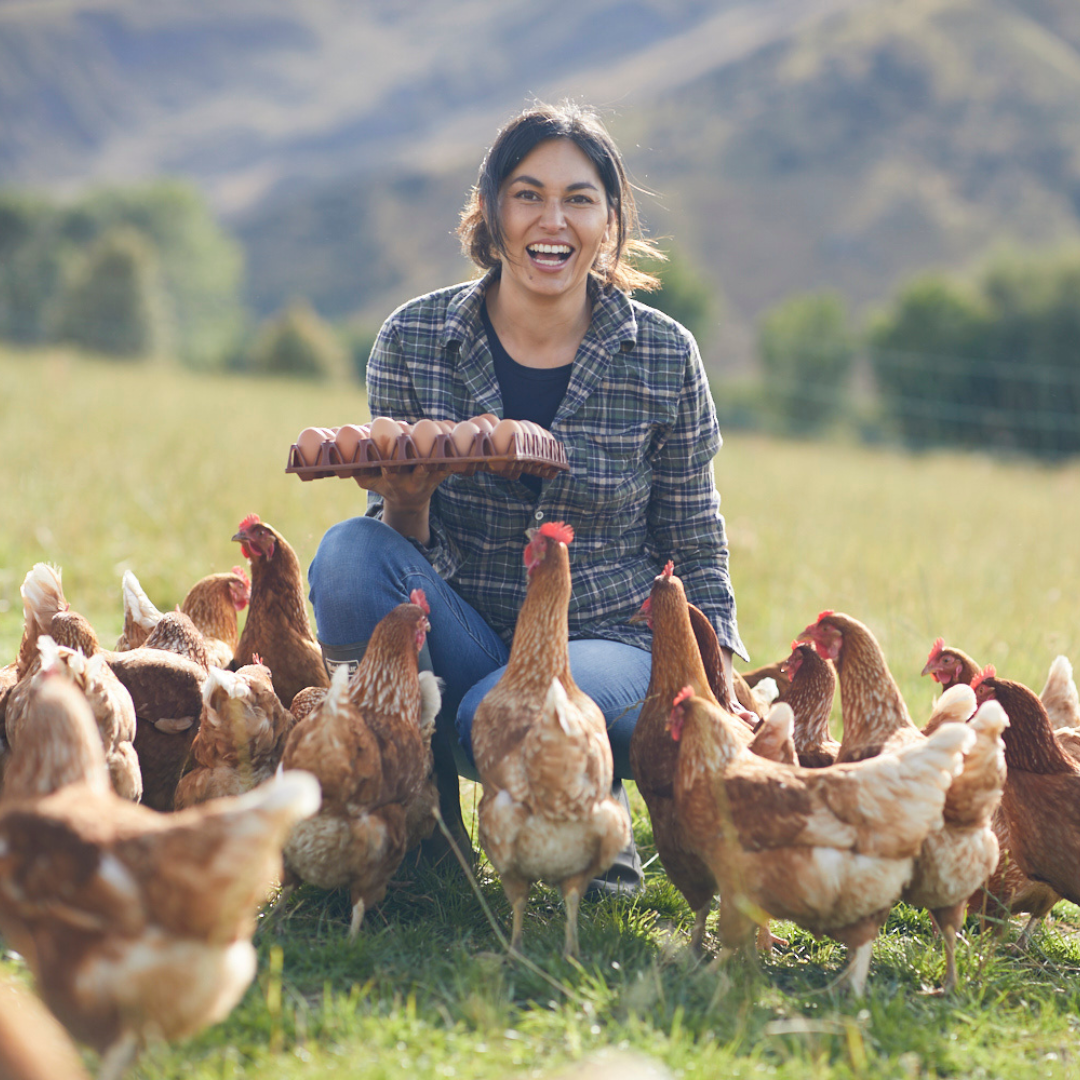
Royalburn is home to roughly 4,000 ewes and produces over 100 tonnes of lamb meat annually. Over 5,000 lay hens produce nearly 1.5 million eggs each year and 100 bee hives make several tonnes of honey. It also produces 700 to 800 tonnes of grains and seeds.

How their farm impacts the New Zealand food industry
A 1.6-hectare market garden stocks its farm shop, which is open to the public seven days a week in nearby Arrowtown. They offer fresh produce, charcuterie, eggs, honey and wool products to visitors. “It’s enough food to feed tens of thousands of people,” says Lim. They are now also open for tours, and available for wedding venue bookings.
Seventy percent of the farm’s products are sold to restaurants and cafés in nearby Queenstown, Wānaka and the Central Otago region. The remaining 30 percent goes to grocery stores. The Amisfield winery, in Queenstown, is one establishment that buys Royalburn meat.
Head chef Vaughan Mabee “pushes the boat out,” Lim says. “He’ll get people to try different parts of the animal that they’re not used to.” Muttonbird in Wānaka is another restaurant working with Royalburn meat. “They take our lamb neck and lamb tongue and create the most amazing dishes out of it,” she says. “It blows people’s minds.”
In the early days, Lim was calling up chefs to encourage them to try her farm’s products. That’s no longer the case. “There are not really any other farms that have the diversification that we do,” she says. The farm-to-plate model certainly helps too.