Representing your country is no small ask, and earning the right to do so has been a journey defined by precision, pressure and purpose. My road to the 9th World Tapas Competition began long before Spain, with an application that asked chefs to distill their culinary identity into a single bite. One that could stand up to the scrutiny of the world’s most respected palates.
Qualifying for the World Tapas Competition
That journey first led me to Mexico, where I competed in the North and South American qualifying round, facing 14 chefs from 12 countries. The brief was exacting: the tapa had to be technically sound, deeply intentional and emotionally resonant. A dish that didn’t just showcase skill but also told a story. Judges were looking for balance, originality, respect for tradition and a clear sense of place. My tapa was awarded Gold, earning me first place across both continents and securing my invitation to Spain. My opportunity to represent Canada on the world stage was set.
The final competition took place in Valladolid, widely regarded as the gastronomic capital of Spain, where tapas is treated as cultural language. Each year, chefs from 16 countries gather to compete. Representative nations included Spain, the United States, the United Kingdom, Germany, Austria, Norway, Thailand, Taiwan, Malaysia, Indonesia, Korea, Australia, New Zealand, Uruguay, Mexico and Canada. The atmosphere was electric; part competition, part global conversation. Every chef was tasked with presenting a single bite that captured the soul of their cuisine.
The judging panel reflected the gravity of the moment. Plates were evaluated by Michelin-starred chefs and global culinary leaders, including Chef Pam, named Best Female Chef in the World, and Paco Morales, whose work has earned three Michelin stars. These are chefs who don’t just taste food, they read it. They look for clarity of vision, technical restraint, bold-yet-harmonious flavour and a dish that understands its own story.
My tapa: “Home in Two Places”

As a Canadian chef with Moroccan roots and a Mediterranean sensibility, I felt the full weight of that responsibility. My competition entry, “Home in Two Places,” was a deeply personal expression. It was a bite that represented who I am and where I come from. Inspired by the structure of a French country terrine, the tapa was layered with the bold, sun-warmed flavours of a preserved lemon and olive tagine. It was rooted in tradition and yet unmistakably my own: rich, aromatic and intentional. A dish meant to speak softly but leave a lasting impression.
Preparing for a competition of this caliber isn’t about practicing harder, it’s about understanding deeper. So how does one ready herself to stand before the world’s most discerning judges? You eat, you explore and you listen. You allow the country hosting you to shape your senses.
Finding inspiration in San Sebastián
For me, that preparation didn’t begin in Valladolid. It led me to San Sebastián, a city where food is lived, not performed. If Valladolid is the beating heart of tapas, San Sebastián is its soul. It’s impossible to cook in Spain without first letting Spain cook you a little. Soften you, inspire you and change you.
With the competition ahead and the weight of representing Canada firmly on my shoulders, I knew I needed a place to ground myself before stepping into Valladolid. San Sebastián was an intentional choice. It is a city where food is not rushed, not staged and never separated from daily life. Here, tapas aren’t created for judges, they’re created for neighbours, for families, for conversation. It’s a place where technique and tradition coexist effortlessly, and where flavour is always rooted in respect for ingredients and place.
I came to San Sebastián to slow down, to recalibrate my palate, and to immerse myself in the rhythms that make Spanish food so deeply expressive. I walked its streets, climbed its hills, explored its markets, and ate the way locals eat, standing at bars, sharing plates, listening more than speaking.
Must-visit restaurants and foodie experiences in San Sebastián
What follows are the places and moments that shaped my time there. From the views that gave perspective to the markets that inspired creativity.
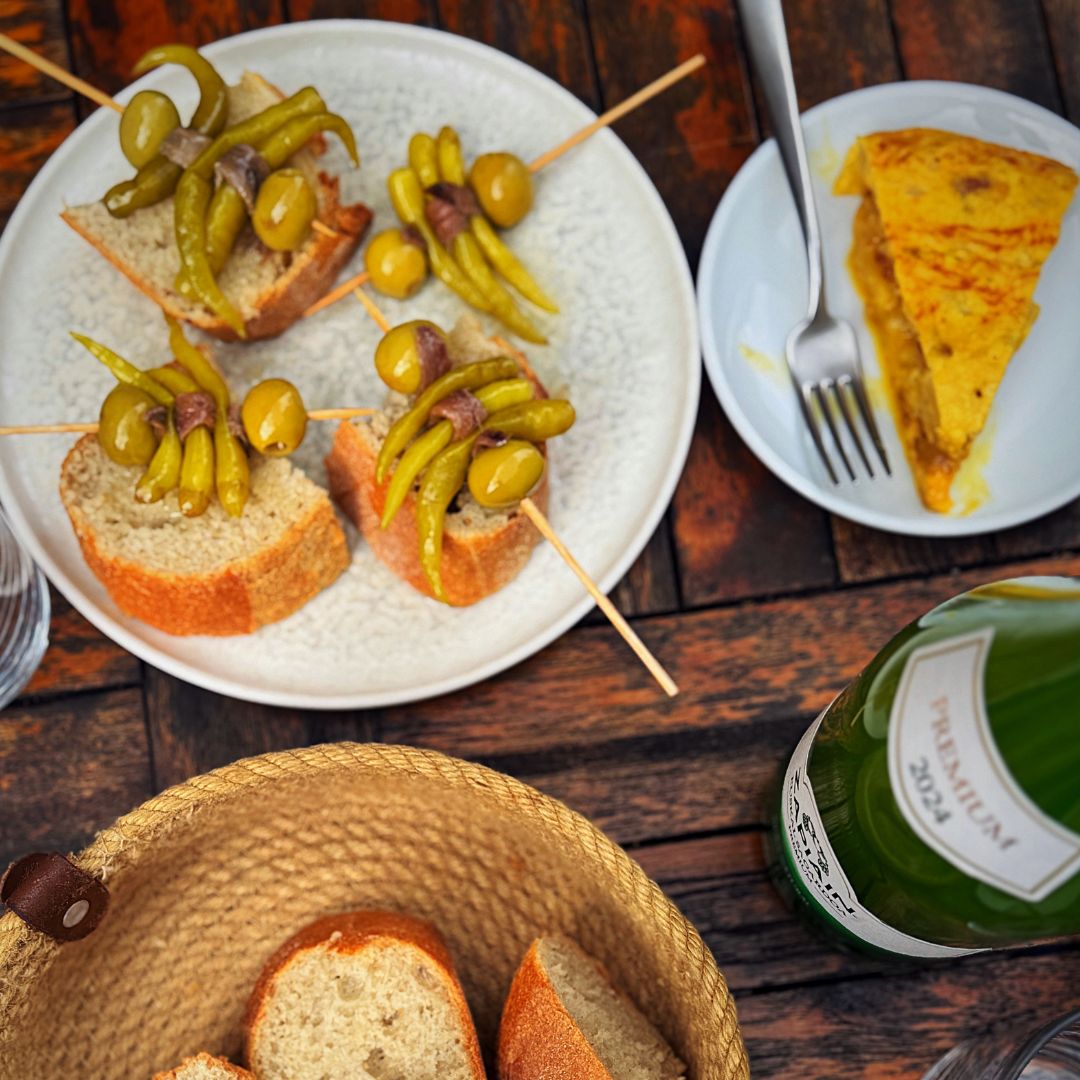
Then there were the bars that defined pintxo culture. (Pintxo is a small snack, similar to tapas, that is often served on a skewer. Locals tend to do a “bar crawl” of sorts, enjoying a few plates way at multiple pintxo bars in one night.) And of course, the meals that reminded me why San Sebastián remains one of the most influential food cities in the world.
La Bretxa Market

The first thing I knew was that I needed to let the country in. This trip wasn’t about inventing something new. It was about grounding myself in the culture that inspired so much of my culinary identity, and giving the dish a sense of place it deserved. So I did what was natural and the first thing was the market.
More specifically, La Bretxa Market. This is a must-visit hub in the heart of San Sebastián, and a place every chef quietly worships. It’s where generations of cooks, from locals to Michelin-starred legends, have come to source their ingredients.
You can feel the Basque spirit from the moment you walk in. The pride of the fish mongers and the precision in the way vegetables are stacked. Vendors beam as they showcase their best produce. A perfect porcini mushroom shines like a trophy. Each ingredient is treated with reverence. When walking through this market, it’s impossible not to feel inspiration. This is where chefs learn that excellence starts with respect for the freshest ingredients. This wasn’t a research trip for my tapa. It was a moment to reset, slow down and remember why I cook.
Address: Boulevard Zumardia, 3, 20003 Donostia
Food Tour with Eat One Feed One
No trip to San Sebastián is complete with guidance from someone who knows the city’s culinary secrets. For me, that guide was Eat One Feed One. This immersive food tour showed me a side of the city that most visitors never see. Hidden pintxo bars tucked down narrow streets, family run shops and bites that only the locals know exist. Each stop was a lesson; how to order like a local, how to pace yourself through a tasting tour and how to appreciate every tapa.
What makes Eat One Feed One especially special is their mission. For every person who joins the tour, they feed someone in need. As a chef, it was inspiring to see food used not only as a vehicle for culture but also to give back. On this tour I was reminded how much technique, tradition and compassion go into even the smallest bites.
Monte Urgull
If you are up for it, this is the best view in the city. I needed a view, an enormous view to put everything into perspective. I needed a hike and the freshwater smell to really clear my senses. Climbing Monte Urgull with my family was an unforgettable experience.
For a chef, this was more than sightseeing, it was grounding. I could observe the city’s layout; the proximity of the markets to the sea and how the locals interact with their environment. But the true reward awaited at the summit: the monumental Sacred Heart of Jesus statue. Proudly atop the 12th century Castillo de la Mota, it watches over the city with a protective stillness. Its scale was breath-taking up close.
Tip: Make sure to wear comfortable clothes and shoes as this hike is all uphill and has many stairs. (Yes, if you have a stroller there are paths you can take to the top without stairs.) Halfway up, you can pause, take in the La Concha Bay, the terracotta rooftops of old town and soak in the heart of the city. Every path, statue and fortification whispered centuries of Basque history and pride.
Address: 20003 Donostia
Antonio Bar
At least one morning in San Sebastián must begin at Antonio Bar, home to the city’s most revered tortilla de patatas. Rich and creamy on the inside, golden and tender on the outside and filled with the deep flavours of caramelized onions. It’s deceptively simple yet perfectly balanced.
The charm of Antonio’s Bar lies in its simplicity. The service is warm, the focus is entirely on the dishes and each bite grounds you in the food that defines Basque cuisine. It is the ideal way to start your day.
Tip: Arriving early is the key. The tortilla is so beloved it sells out fast. So when they say they open at 9:00 am, be there for 8:45 am. Trust me on this one.
You must try the iconic tortilla de patatas
Address: Bergara Kalea, 3, 20005 Donostia
Bar Goritti
For a mid-day snack, Bar Goritti offers some of the best Gildas I’ve ever tasted. (A Gilda is a classic Basque pintxo dish commonly featuring anchovies, pickled guindilla peppers and green olives on a skewer.) Tangy, pickled and full of punchy flavour.
The varieties here are endless. But the star of the show is the version with head cheese, which quickly became my favourite. The atmosphere reflects the local approach to pintxos and mid-day service, akin to stopping at your local sandwich shop. It’s casual, lively and centered on conversation as much as cuisine.
You must try the head cheese Gilda
Address: San Juan Kalea, 3, 20003 Donostia
Casa Urola

At Casa Urola, a single bite of seared scallop in ajo blanco with coffee vinaigrette left an impression that lingered long after I left. Perfectly caramelized, tender and enhanced with the depth of coffee, it exemplifies how creativity can elevate tradition. It reminded me that innovation thrives alongside respect for ingredients. This is a dish that should be a must-try on your list. In fact, it’s a dish I will crave and dream of until the next time we meet again.
You must try: the seared scallop with ajo blanco and coffee vinaigrette
Address: Fermin Calbeton Kalea, 20, 20003 Donostia
Sirimiri

Located just steps from Old Town, Sirimiri is a small intimate spot. It offers a masterclass in modern Basque pintxos; playful, beautifully composed and rooted in local traditional. The braised beef cheek paired with a glass of Rioja was a perfect mid-day indulgence. In this region, beef cheeks are treated with near reverence. It gets cooked low and slow until completely tender and bathed in rich glossy sauces. The dish speaks to generations of home cooks and taverns, and Sirimiri’s version is a stunning tribute to this tradition.
An honourable mention goes to a pintxo that surprised even me: a seared duck breast served with crispy parsnip chips and a bright pineapple compote. The combination was unexpected but worked beautifully. It was a dish that just makes you say ‘Wow.’ Together, these two dishes capture what makes San Sebastián so unforgettable; the ability to make a small plate feel monumental.
You must try: the braised beef cheek on potato, and seared duck breast with parsnip and pineapple
Address: C. Mayor, 4, 20003 Donostia
La Cuchara de San Telmo
If there is one place that captures the soul of San Sebastian’s culinary scene, its La Cuchara de San Telmo. The tiny, wildly popular bar became my favourite spot of the entire trip. From the moment you step inside, you are swallowed into a symphony of sound. Orders being shouted over the counters, pans hissing, plates clattering, names being called into the crowd with the urgency of a finish line.
And somewhere in the midst of that beautiful chaos, was me. Ordering so much food that the entire bar knew my name, because it was being yelled out every few minutes with yet another dish ready to be handed off. This is pintxo life at its purest. You stand shoulder-to-shoulder with strangers, pressed by energy and anticipation and the irresistible smell of the slow cooked meats and seared seafood. At first, it’s intimidating. It’s loud, fast and wildly unstructured. But once you understand the rhythm and embrace the experience, it becomes one of the greatest joys of eating in San Sebastián.
The food is everything you want in a Basque meal. Roasted peppers and suckling pig to tender squid cooked in its own ink. Rich and crispy pig’s ear to deep and savoury blood sausage (or morcilla). Each dish was an explosion of flavour and technique. This place isn’t just a restaurant, it’s a rite of passage. A sensory, slightly chaotic and utterly unforgettable immersion into Basque cooking.
Tip: If you want more than two or three dishes, remember to specify pintxo portions, otherwise you’ll be surprised with full raciones. I learned this the hard way.
You must try: the roasted peppers, the blood sausage (morcilla) and the crispy pig’s ear, but the entire menu is amazing
Address: Santa Korda Kalea, 4, 20003 Donostia
La Txuleteria
When you need a break from the shoulder-to-shoulder intensity of pintxo bars, head across the river to Gros. This is a neighbourhood known for its surf culture, relaxed energy and more spacious dining rooms. Here, La Txuleteria offers a completely different rhythm. A chance to sit, breathe and savour without the bustle of people.
This restaurant specializes in aged meats, and the craft behind them is nothing short of exceptional. We had a 48-day aged ribeye that was deeply marbled, intensely flavourful and cooked with true respect to the ingredient. Every bite was rich, tender and almost impossibly satisfying. This is the kind of dish that stays with you.
The atmosphere here is warm and unhurried, giving you space to really appreciate what is on the plate. It’s not formal, it’s simply thoughtful. This was a moment of indulgence in a trip filled with high energy eating.
Tip: Be sure to make reservations at least a day ahead at any restaurant in Gros, as the small section of the city is still bustling with people and can be hard to get into.
You must try: the dry-aged meats and good wine
Address: Padre Larroca Kalea, 6, 20001 Donostia/ San Sebastián
Taberna Gandarias Jatetxea

San Sebastián’s connection to the sea is undeniable, and tasting it firsthand is an essential part of any culinary journey. Taberna Gandarias Jetetxea immediately drew me in with the gorgeous pintxo and raciones of seafood. Each dish highlighting the freshness of the ocean. There was perfectly cooked octopus, and innovative bites like the sea urchin custard topped with kataifi and salmon roe. Every morsel tells a story of sourcing, timing and the Basque dedication of letting the ingredients speak for themselves.
You must try: the sea urchin custard topped with kataifi and salmon roe
Address: 31 de Agosto Kalea, 23, 20003 Donostia/ San Sebastián
La Rampa
For a more immersive experience, visit La Rampa, which is nestled right on the waterfront. They bring the ocean to the table in a relaxed sit-down setting. Here you can savour the flavours of the day’s catch. Tender octopus kissed by smoke, sardines grilled to perfection or fish simply served with olive oil and a sprinkle of sea salt. Eating here is enjoying more than a meal. It’s a connection to the sea and a celebration of freshness. The view of the bay and the aroma of grilling seafood make this stop a multi-sensory experience that can’t be missed.
You must try: the fresh fish, the fried sardines and whole fish are a must
Address: Kaiko Pasealekua, 26-27, 20003 Donostia/ San Sebastián
Atari

No culinary journey through San Sebastián would be complete without dessert. While the iconic La Vina was closed for the holidays, Atari delivered a perfect finale. Their torrija, a Spanish take on French toast, was perfectly soaked, delicately crisp, caramelized with a subtle sweetness. It gets paired with Patxaran, a berry liqueur that adds warmth and a gentle aniseed note. Each bite was indulgent and satisfying. Atari’s dessert wasn’t just a sweet ending. It was a punctuation mark, a reminder of why San Sebastian continues to inspire chefs and travelers alike.
You must try: the Spanish French toast (torrija)
Address: C. Mayor, 18, 20003 Donostia/San Sebastián
More stories on the Canadians shaking up the culinary world ELLE Gourmet
Explore more stories that centre Canadian chefs and food industry leaders, from Toronto-based restauranteurs to chefs from coast-to-coast:
Yannick Bigourdan reimagines fine dining at Michelin-recommended spot, Lucie
The famed Toronto-based restauranteur talks about sustainability in his restaurants and his creative partnership with executive chef Arnaud Bloquel.
Meet Canada’s winner of The Vero Bartender competition
We caught up with Zisheng Hong from Montreal to learn more about his visionary take on the Amaro Montenegro cocktail and how it set him apart from his competitors.
Canadian chef Jessica Rosval uplifts women through cooking
How the Montreal-born chef leads with care, whether she’s cooking in a Michelin-starred kitchen or at her not-for-profit restaurant in Italy.