Gather round and I’ll tell you a rags-to-riches tale of a perky little cocktail from down Tijuana way: the Billionaire Margarita. The common cocktail shook off its humble beginnings and made it to the lofty peak of Manhattan high society. Though some say that in the process, it turned its back on its roots and lost touch with who it was.
The lofty peak in question was the bar at The London NYC hotel, circa February 2016. That’s when the Billionaire Margarita appeared on the cocktail list, priced at US$1,200. The hotel’s food and beverage director, Jayson Goldstein, told Forbes that the price was perfectly justified, considering the spirits involved. 1½ oz of Patrón en Lalique Serie 1, a blend of the finest, oldest Patrón tequilas, then cost US$7,500 a bottle and is no longer available. ½ oz of Rémy Martin Louis XIII Cognac, currently $5,302 in Ontario. The cocktail contained no orange liqueur but was finished with various juices, nectars and bitters.
History does not record how many were sold; the hotel closed three years later. Forbes saw this Billionaire variety as the summit of the margarita’s career, but to others, it was the low point. Who needs brandy in a margarita? skeptics asked. And where on earth was the triple sec?
History of the Billionaire Margarita
The first time anyone tasted a margarita was probably in London during the 1930s, at the famous Café Royal. In that time and place, the drink was known as a picador, but it was identical to the version we know today: tequila, Cointreau and lime juice. It fit neatly into Britain’s venerable Daisy family of cocktails (a spirit plus something sweet, usually a liqueur, plus something sour, typically citrus juice), though in England, tequila would have been considered a very exotic incursion.
Not so in Mexico, of course. There, and in bars and restaurants north of the border, margaritas began to pop up in the late 1930s and ’40s, starting perhaps at the racetrack in Tijuana—though the first written mention of the name was in Esquire, in 1953. Coincidentally (or not), margarita is Spanish for “daisy.”
The drink finally caught on in the 1970s, when America was discovering tequila. But the recipe most people encountered was for the rock-bottom version of the cocktail served in bogus Tex-Mex chain restaurants. A cold mess of cheap mixto tequila, bar-rail triple sec and powdered sweet-and-sour mix.
“Cadillac Margaritas”: The Posh Way to Drink a Margarita Emerges
It wasn’t long before fancier versions started to appear. So-called “Cadillac Margaritas” made with upgraded ingredients, such as 100 percent agave tequila, Grand Marnier liqueur, with its orange and cognac notes, and fresh lime juice. These posher takes were a much smoother, classier ride. They were also precision-engineered, like the famous automobiles for which they were named.
There have been many variations over time. For example, there is the Crossroads Cadillac at House of Blues in New Orleans. It is a regular triple-sec margarita that comes garnished with a miniature bottle of Grand Marnier, to be poured by the customer onto the surface of the cocktail. As might be expected, the liqueur dominates the experience. The tequila they use is Teremana Blanco, an entry-level spirit. Although the fact that the brand’s founder is Dwayne “The Rock” Johnson may add a certain (undetectable) cachet. The point of most Cadillac or Millionaire margaritas is to use an upmarket tequila. That would either be a reposado (oak-aged for two to 12 months) or an añejo (oak-aged for longer).
Where to Find Billionaire Margaritas in Canada
Here in Canada, a prime example is the Grand Cadillac Margarita ($125), currently on the list at Toronto’s Bar XXX. It’s the tiny, eccentrically decorated underground domain of an exceptionally talented English bartender known to his clientele as H. In the past, H tells me, he has used more expensive, cognac-forward expressions of Grand Marnier in the cocktail. Today, it’s regular Grand Marnier, but the tequila is special. It’s Jose Cuervo Reserva de la Familia Extra Añejo (around $210 in Ontario), aged for over three years in French and American oak. On its own, the spirit has a dry complexity. It cradles the taste of agave with controlled notes of nutmeg, cinnamon and toasted almonds.
To make his drink, H reaches for a handmade Italian Match pewter and crystal glass. Then, he rubs a cut lime over an area that reaches down two inches from the rim and about a third of the way around and rolls it over a saucer of salt. He shakes 1½ oz of the tequila with ¾ oz Grand Marnier and ¾ oz freshly squeezed lime juice. Finally, H tips everything, ice and all, into the glass. That’s it. No agave syrup or bitters, no garnish.
It’s a tart, dry, refreshing bona-fide margarita with all the nuances of that remarkable tequila loud and clear. It shines against the background of lime and the hint of brandied orange circling the spirit like a moon in close orbit. H says he sells a lot of these cocktails, especially to people who have an occasion to celebrate and are looking for something rare and extravagant.
Self-indulgence is relative. It might feel like a sinful waste to use a precious sipping tequila in a cocktail. On the other hand, doing so can reveal new dimensions and possibilities in the spirit— like finding out that an opera star also sings jazz. Back home, my most prized tequila right now is the Reposado Especial from Elevación1250. It’s a unique creation aged in Canadian white-oak rye-whisky barrels. Though I strain the cocktail rather than mimicking H’s “dirty pour,” the overall effect is close to his sleek and polished Grand Cadillac. And, most importantly, unlike the Billionaire’s version, it is unmistakably a tried-and-true margarita.
Recreate Canada’s fanciest margaritas at home

Casa Madera’s Noble Margarita
At 1 Hotel Toronto, you’ll find a vibrant menu full of Mediterranean- and Mexican-inspired recipes, including sumptuous margaritas. This version gives the classic cocktail a bold, herbaceous and spicy twist, making it unlike anything else you’ve tried.
Get Recipe
Nobu’s Mia Margarita
Kick off a lavish dinner at Nobu Toronto with the brand’s signature margarita, which gets an intoxicating kick from shichimi togarashi, a zesty Japanese seven-spice blend.
Get Recipe
JJacques’ Cadillac Margarita
In Quebec City, the team at Jjacques has filed the Cadillac Margarita under the “First Class” section of their cocktail menu—a category defined by sophisticated craftsmanship and their collection of top-shelf spirits. This cognac-forward version is richer and more aromatic and more than lives up to the legend.
Get Recipe
Shelter’s Sotol and Daikon Margarita
Paulina Arteaga, head bartender at Calgary cocktail bar Shelter, wanted to create an “out of the ordinary” margarita. She landed on this flavour-packed recipe made with sotol, which has an exciting mixture of vegetal, smoky, pickled, spicy, citrusy and funky notes.
Get Recipe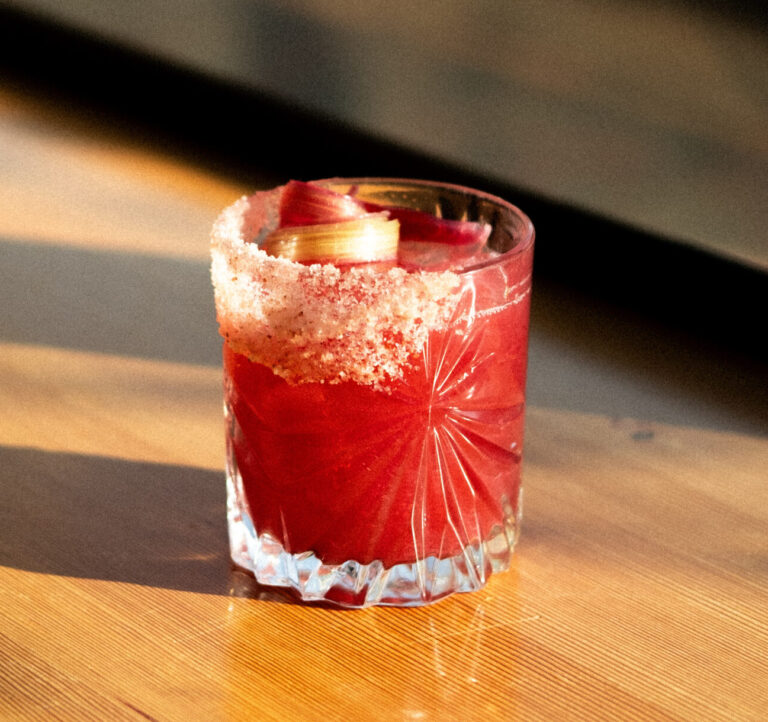
Rhubarb Margarita
Sweet-tart rhubarb gives this margarita from Saskatoon’s POP Wine Bar its striking colour and fresh seasonal flavour.
Get Recipe