In Simple Country Living, homesteader and author Annette Thurmon shares the techniques she uses at Azure Farm, including her approach to one of her favourite pieces of kitchen equipment: cast iron. There are plenty of opinions about the best way to clean and season a cast-iron pan; in this excerpt from her book, Thurmon shares the method that works for her.
How Annette Cares for Cast Iron
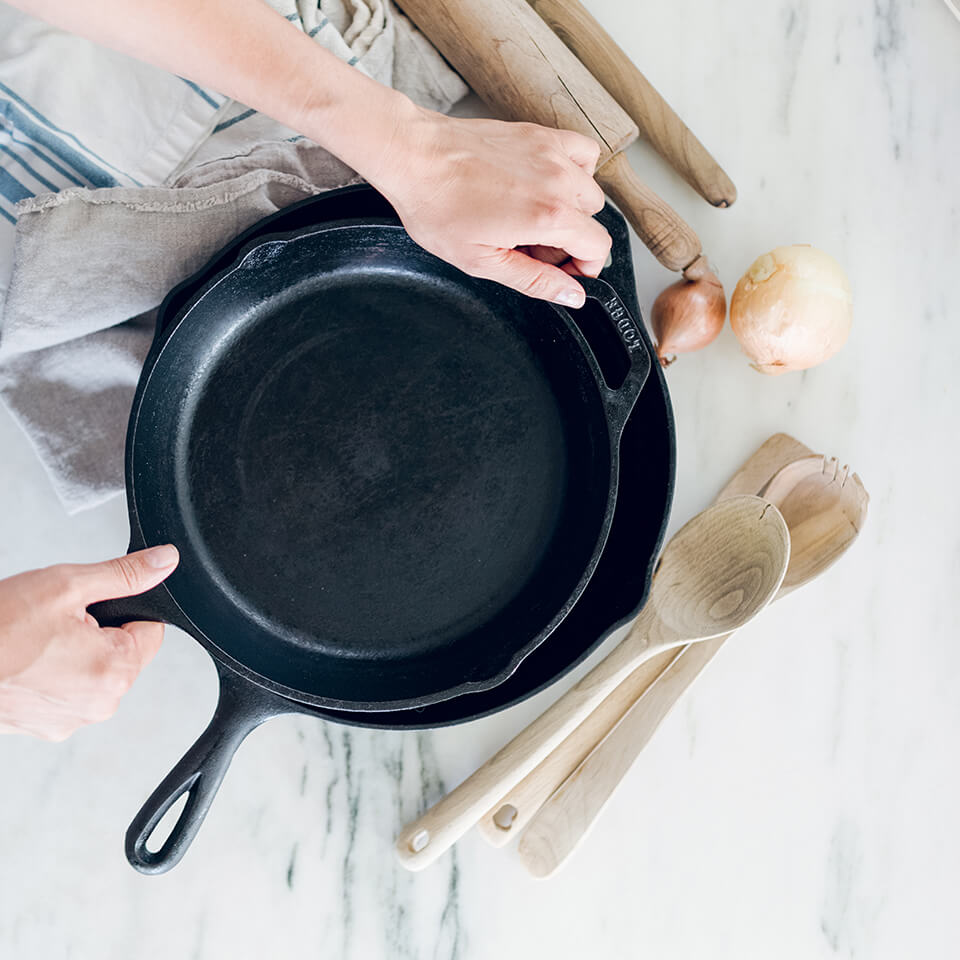
Cast iron is my absolute favourite vessel to cook in. It is durable, versatile and a reliable cooking material with excellent heat retention properties. I can use it on stovetops, in ovens or over an open flame, and it is perfect for both savoury and sweet dishes.
My favourite things to cook in cast iron are pancakes and cinnamon rolls, sautéed veggies, stir-fry, fried potatoes, pot pie and cobblers. I use stainless steel pots only for steaming veggies or cooking soups and stews. Cast iron is extremely durable and can last generations with proper care, though it can crack or rust if mishandled.
Caring for cast iron is a little more involved than for most other types of cookware, but it is very manageable. The key is seasoning, or creating and maintaining a nonstick surface that protects the cast iron, helps prevent rust and is longer-lasting and a natural alternative to synthetic nonstick coatings. Oil heated on the cast-iron surface bonds with the metal to form a protective layer. With continued use, the layer becomes thicker and the surface becomes more nonstick, making it easier to cook with and clean.
There are differing opinions on how to clean and care for cast iron, but here is what has worked for me.
How to Clean a Cast-Iron Pan
- Use a wooden spatula to remove any food debris.
- Clean the cast iron with warm water and a stainless steel or chainmail scrubber to remove any remaining debris, if necessary.
- It is not necessary to avoid soap—mild dish soap can be used if needed and will not strip well-developed seasoning. I sometimes use soap with warm water to help soften stuck-on food. If you use it, be sure to rinse thoroughly and dry the pan well.
How Annette Seasons Cast Iron
- Preheat your oven to 450°F (232°C).
- Scrub unseasoned cast iron or cast iron with broken-down seasoning with hot soapy water. Use a stainless steel or chainmail scrubber to remove any debris.
- Dry well with a towel.
- Lightly coat every part of the cast iron, including the handle and bottom, with a thin layer of oil with a high smoke point, such as avocado, grapeseed or flax.
- Wipe away any excess oil—there should be only a very thin layer left, as too much oil can cause the surface to become sticky or smoke.
- Place the cast iron upside down in the oven for about an hour (you can place foil or a tray on the rack below to catch any drips), then turn off the oven and let the cast iron cool completely before removing it.
- If it has a smooth, dark finish and isn’t tacky to the touch, it is ready.
Annette’s Tips for Cooking With Cast Iron
- Always preheat the skillet before adding anything to cast iron, even oil.
- Add a little bit of oil or butter to the pan before you put anything else in it.
- Try not to flip and mix a lot when warming food. (I have found that the more you move things around, the more it coats the pan with other substances and can tend to stick.)
- Experts recommend oiling cast iron after every use. I just rub a little bit of coconut oil on the pans each time. You can season it two or three times a year, or as needed.
Cast-Iron Care FAQs
- Does Annette use soap on cast iron?
- Yes. Thurmon says she sometimes uses mild dish soap to soften stuck-on food, then rinses and dries the pan thoroughly.
- How often does Annette season her cast iron?
- Thurmon seasons hers two or three times a year, or as needed, and lightly oils the pan after use.
- Why can a cast-iron pan become sticky?
- According to Thurmon’s method, using too much oil during seasoning can leave the surface tacky. She recommends applying only a very thin layer and wiping away the excess before heating.
- How does Annette prevent rust on cast iron?
- She dries the pan thoroughly after washing and maintains its seasoned surface with a light coating of oil.
Recipes to Make in a Cast-Iron Pan

Easy Cast-Iron Skillet Pizza
All you need are good-quality ingredients, ready-made pizza dough and a cast-iron skillet to make an easy and delicious homemade pizza.
Get Recipe
Skillet Broken Lasagna
Want all the big, irresistible flavours of a lasagna without fussing over layers of sauce, noodles and cheese? We’ve got you.
Get Recipe
Easy Chicken Pomodoro Skillet
In just one skillet, chicken breasts are gently simmered in an easy homemade tomato sauce for a quick weeknight dinner.
Get Recipe
Molten Salted Caramel Skillet Brownies
Fudgy, decadent and just right when you need real comfort, this is one to eat warm, topping it with lots of vanilla or caramel ice cream.
Get Recipe
Adapted from Simple Country Living by Annette Thurmon.