In the world of Canadian farm-to-table cooking, few names are as recognizable as Michael Smith. Chef, farmer, innkeeper, television personality, Prince Edward Island food ambassador and cookbook author are just a few of his titles. But at the heart of his cooking is something much simpler: an abiding respect for ingredients and where they come from.
When ELLE Gourmet spoke with Smith following the release of Farmhouse Vegetables: A Vegetable-Forward Cookbook, the conversation ranged from his family’s changing eating habits to the hundreds of vegetables and herbs grown at the Inn at Bay Fortune, the P.E.I. property he owns with his wife, Chastity.
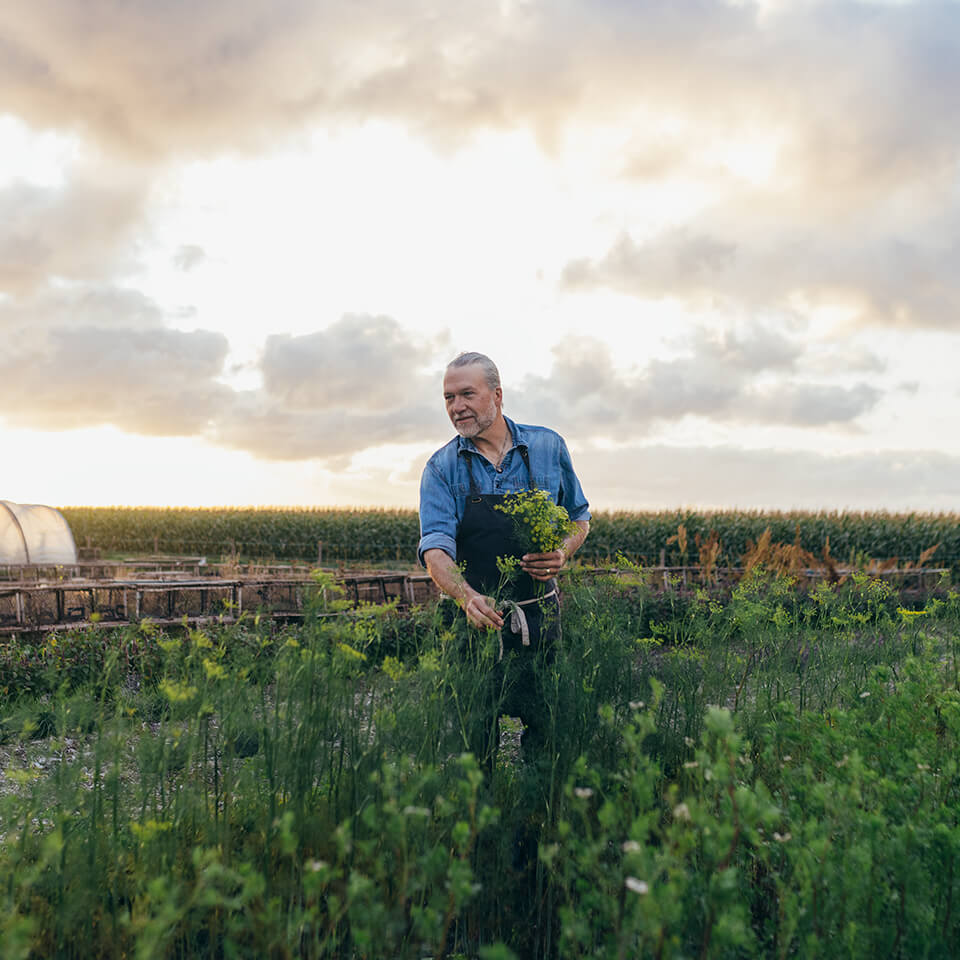
The farm supplies the inn’s dining room and also serves as one of the retreat’s attractions for guests. It’s also the backdrop for many of the artful dishes that fill the pages of Farmhouse Vegetables. For Smith, the vegetables always take centre stage, flavour- and presentation-wise. “We just treat the vegetables the way we do meat – with the same respect and reverence,” says Smith.
Farmhouse Vegetables is your 12th cookbook. What was your vision for it?
“I’m my family’s cook. I’m cooking for teenagers now, and over the past couple of years, we’ve found ourselves craving the vegetables I cooked with the meat more than the meat itself. We just don’t like eating these big, rich meat-forward meals anymore. I should be careful – that’s how we’ve always eaten – it’s just that we have more and more wonderful vegetables in our lives now with the farm. And October 10, 2026, there’s a definite move toward lighter, healthier fare.
[Journalist] Michael Pollan said it best: ‘Eat food. Not too much. Mostly plants.’ I am making no claims to originality or being the first out of the gate or anything like that. This is a solid trend that’s been growing and building for years, and I’ve seen it in my own family. We just want to eat a lot of vegetables.”
Farming can seem idyllic, especially in the book. But it’s hard work too. Can you tell me what it’s really like on the farm?
“The things that can be a real toil [are the things] we do together – our team is on that farm every single morning at 10 o’clock. That way, it’s fun, [there’s] camaraderie and we can avoid a lot of the drudgery. Look, I’m not going to paint this Pollyanna bullshit version of it. A farm is work; there’s always uncertainty, there’s always hope, there are always weeds. And, yes, there are times when you wish you were doing something else. But our team is here for this farm. They’ve come to work on this farm, so the spirit is good. I know how lucky we are [to have] that.”
You’ve said that you grow 400 things on your farm. What’s next?
“We’re actually starting construction any day now on this big, splashy new greenhouse, so we’re talking about some of the things we can grow in that environment. I’d love, for instance, a great big rosemary tree like you might see in the Mediterranean. We’re going to try citrus, just for fun, to see if we can nurture a lemon or lime tree. We’re constantly trying new things. There’s very much a sense of innovation and ‘newness’ surrounding us.”
Most people can’t grow 400 different plants in their backyard. What would you suggest they try growing at home?
“If there’s a particular thing that you really, really love, grow that thing and specialize in it. Maybe it’s tomatoes, maybe it’s basil, maybe it’s lemon verbena. Or maybe it’s more obscure herbs, like lovage or anise hyssop – these are all super easy to grow, and they’re game-changers because they’re so flavourful. You can grow fresh peas – there are so many different parts of the plant you can enjoy throughout its life cycle.
In particular, I would strongly suggest sunchokes. They were part of kitchen gardens here thousands of years ago, and we grow them as a way of honouring that. I could go on and on about foraging and our connection to so-called ‘wild’ food – what we consider wild today but was actually very common years and years ago – because it’s all part of how we’ve created connections with the First Nations communities around us.”
Do you just eat wholesome vegetables all the time or do you ever, like, order McDonald’s?”
[Laughs] “Yeah, a cheeseburger and fries.”
Cook With Michael Smith

Cauliflower Chickpea Fritters
Crispy cauliflower and chickpea fritters turn everyday vegetables into an easy, satisfying side dish.
Get Recipe
Gnocchi With Spinach Sauce
Crispy potato gnocchi meet a creamy nutmeg-spiked spinach sauce in this comforting vegetable-forward recipe.

Root Vegetable Pavé
Colourful root vegetables are layered and baked until tender and golden in Michael Smith’s impressive vegetable pavé.

Maple-Glazed Sweet Potatoes With Pesto
This baked sweet potato recipe gets PEI Chef Michael Smith’s unique touch with maple syrup, coriander seeds and fennel seeds.
Get Recipe
Butternut Squash Pie
Michael Smith’s recipe for a sweet butternut squash pie with a pumpkin seed crust and Bourbon whipped cream to serve
Get Recipe