In the first professional kitchen she ever worked in, chef and entrepreneur Suzanne Barr was told by her boss that she would never make it in the industry. Why? Because she allegedly hadn’t “honoured the work.” The experience left a mark.
“It took me a long time to acknowledge that I’m a chef and an even longer time to recognize that I’m also an artist and an advocate,” she says.
Today, Barr is doing more than honouring the work. She is changing the traditional kitchen hierarchy in favour of a fairer system. She is using art and activism to build a brighter future for the industry. And through it all, she’s ensuring that everyone is appreciated for what they bring to the table.
Suzanne Barr’s Stacked Resume: Chef, Creative and TV Judge

It’s precisely this multi-faceted perspective that has propelled Toronto-born Barr upward in her decades-long career in the culinary world. And she shows no signs of stopping. That includes consulting on restaurant projects and dreaming up her own eponymous product line launch. Think: art-deco-inspired aprons and gourmet provisions.
And her already stacked resumé continues to grow by the day. She is a two-time restaurateur, including the popular Toronto brunch spot Saturday Dinette. It was beloved for its flavourful dishes and community-centric atmosphere. She was also the first chef-in-residence at the Gladstone Hotel in Toronto. Barr even starred as a judge on Food Network Canada’s cooking competition series, Wall of Chefs.
My Ackee Tree: A Cookbook-Memoir Hybrid
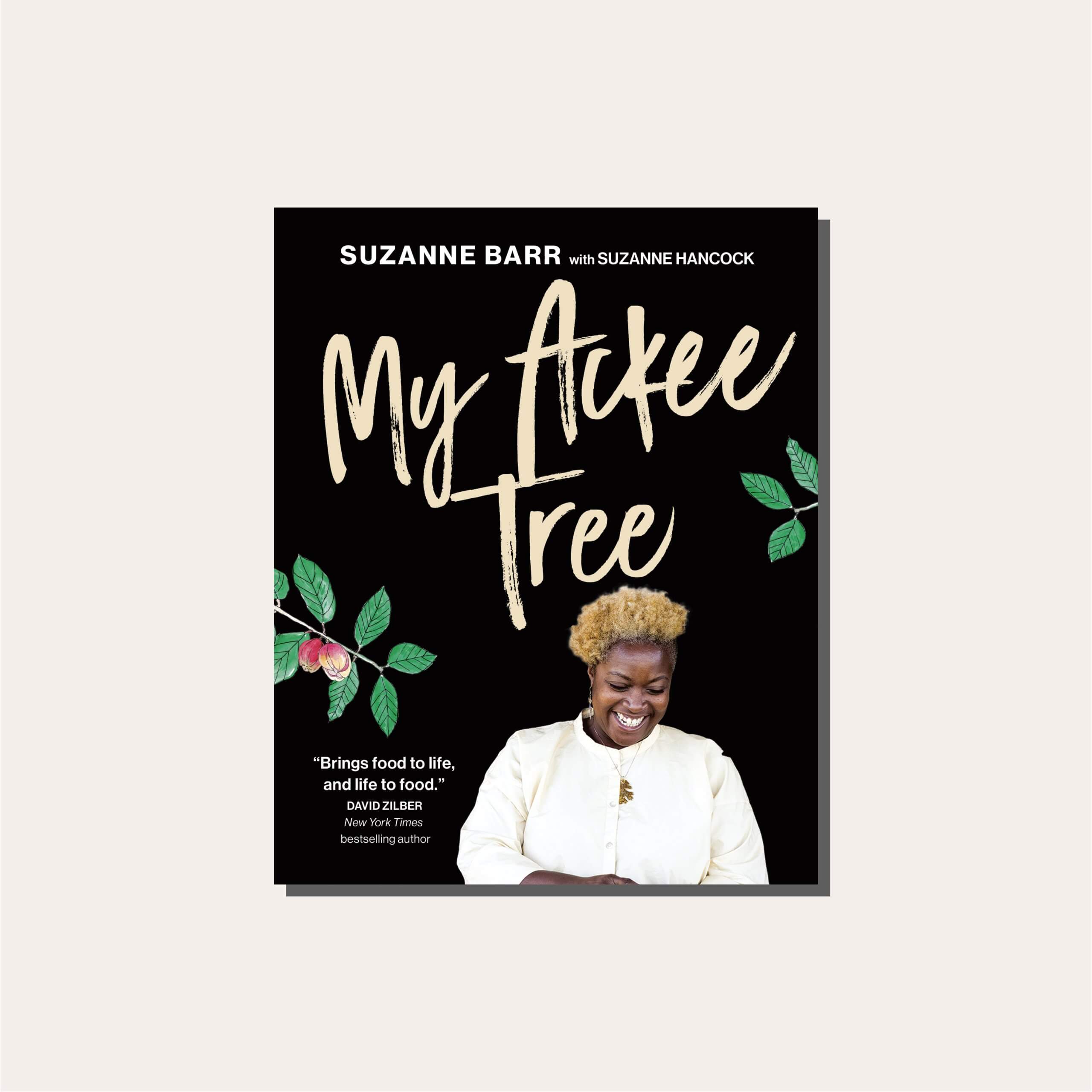
With the 2022 release of her cookbook-memoir hybrid, My Ackee Tree, Barr added “author” to her list of achievements. But putting her own story into words proved to be as challenging as actually making the journey of love, grief and finding the real meaning of home.
“It was a process to accept that my vulnerability can be a badge of honour and be a bridge that allows people to tell their own stories,” says Barr. “Vulnerability is not going to weaken you or break you; it’ll give you the strength to overcome some of the things that you’ve endured.”
She hopes that sharing her experiences will inspire other women– in particular, women of colour– to speak up. “We know how important our stories are because we get left out of the stories all the time,” says Barr. “I don’t want that to be our continued struggle, and this is what’s going to protect us.”
To this end, Barr has created her own production company, Lemon and Honey, to provide a platform for these stories. She has also been working on a television show that will spotlight chefs and their personal stories. “It’s about more than just the awards and the many restaurants that some chefs have,” says Barr. “It’s about those first people who influenced us and that first dish that inspired us.”
Jamaican Roots: The Personal Reason Suzanne Barr Returned to Food

Barr’s earliest memories of cooking are in the kitchen of her childhood home in Florida. But at 25, she became a live-in caregiver to her mother. That’s when she realized she didn’t know how to cook the comforting traditional Jamaican dishes she once watched her mother make.
After her mom passed away from pancreatic cancer, Barr moved to New York to take a job as an MTV producer. But five years later, she found herself longing to reconnect with her mother through the thing that had always bonded them– food. So she enrolled in culinary school at the Natural Gourmet Institute in New York.
“It always felt like becoming a chef was not my only mission,” says Barr. “It was also learning about how food connected me and my family together—through every menu I created, every team I was able to be a part of and every person I had a chance to work with and cook with.”
One recipe, which is featured in My Ackee Tree, is for her Jamaican Curry Chicken. It is so good, it convinced a financier to invest $100,000 for her to open a restaurant. It features dark chicken meat, Yukon Gold potatoes and a Scotch bonnet pepper simmering in bold spices and coconut milk. This flavourful and aromatic dish is perfect for weeknight dinners or festive gatherings.
Always An Advocate: Supporting Non-Profits in the Food Industry
She’s also dedicated to ensuring that society’s most marginalized voices are heard, inside and outside the kitchen. Barr’s advocacy has led to her working on the boards and fundraising initiatives of local and international organizations.
That includes Not 9 to 5, a non-profit focused on mental health in the foodservice and hospitality sector. She has also worked with Black Creek Community Farms, which offers programming to address food insecurity and literacy. FoodShare Toronto is a food-justice organization that supports community-led food initiatives.
Another non-profit she has worked with is Community Food Centres Canada, which empowers low-income communities through the power of food. Finally, there is Chef’s Manifesto, where chefs from around the world try to create a sustainable food system using the UN Sustainable Development Goals.
For Barr, it’s not enough to have a room full of seats. Her goal is to foster conversation and collaboration among a stadium’s worth of people to transform the food industry.
“We have a long road ahead of us to kind of begin to fix and reimagine this militaristic way of running a kitchen and a restaurant,” says Barr. “Having equity at the forefront of this conversation is so important to be able to see a future where people are valued as much as the food that people that are coming to pay for.”
More Homegrown Heroes on ELLE Gourmet
- Chef Ned Bell Shares Tips for Sustainable Cooking on a Budget: The B.C.-based chef explains why sustainability is so important to him, and how to buy seasonal seafood for less.
- Behind Kebaonish, an Indigenous and Woman-Led Drink Company: Located on Tyendinaga Mohawk Territory in Ontario, this coffee and tea brand is infused with cultural teachings.
- Canadian Chef Jessica Rosval Uplifts Women Through Cooking: This Montreal-born chef is positively impacting the industry at her not-for-profit and three-Michelin-starred restaurants.