Out of all the tools in a cook’s arsenal, there is arguably none more important than the all-mighty chef’s knife. “They’re so versatile,” says Braden Chong, executive chef of Toronto’s Michelin-recognized hot spots Sunnys Chinese and Mimi Chinese. Whether you’re slicing or dicing vegetables, butchering meat or getting in between bones, chances are a chef’s knife can do it. “Is it the best knife for every job? No,” he adds. “But can you do every job with it? Yes.” This is thanks to its long, wide blade that gently curves to a sharp point. It’s this multi-functionality that makes a chef’s knife a must-have for anyone who steps into a kitchen. Plus, reaching for one knife instead of five simplifies prep work (and cleanup).
Western vs. Japanese chef’s knives: What’s the difference?

“In most Canadian kitchens, there are two main styles of chef’s knives: European [or Western-style] and Japanese,” explains Chong. While it’s difficult to point to the exact origins of these styles, the popularization of the Western chef’s knife has ties to late-18th-century France, alongside the rise of the à la carte restaurant chef. To get the endless chopping done quickly and efficiently, chefs needed a durable knife. It had to be big enough and able to handle large amounts of different ingredients. Voila! The chef’s knife was born.
It was these French kitchen knives that inspired the modern Japanese chef’s knife – or “gyuto” – in the late 19th century. But the craftsmanship has roots in samurai-sword making. Generally, Japanese-style blades will have less of a curve than their Western-style counterparts. Their straighter edge is designed for “push-pull” cutting. This technique favours slicing over rocking (when the knife’s point stays on the board as the blade moves up and down).
Chong notes that Japanese styles tend to be thinner, which makes them feel sharper (and slightly more prone to chipping). They’re also typically (though not always) angled on one side (a single-bevel blade) for incredibly precise, delicate slicing. Depending on your dominant hand, you can choose which side you want sharpened.
Western-style blades, on the other hand, tend to be sharpened on both sides for a double edge. This means you can use both sides of the blade to cut. Chong recommends a double-bevel blade for beginners because they’re easier to sharpen and there’s less of a learning curve.
How to choose the best chef’s knife: Expert tips from a professional chef

Stainless steel vs carbon steel knives: Which is better for home cooks?
Within these two styles of chef’s knives are several models that come in countless shapes, sizes, weights and metal types. Chong prefers stainless steel over carbon steel because you don’t have to worry about rusting. He also suggests shopping for a knife in person so you can test out different ones and get a feel of the handle. A wood handle has a more natural and traditional feel, but it requires more care than synthetic options.
Ultimately, he says, you don’t need “the Lamborghini of chef’s knives” for it to be useful. “The most important thing is learning how to sharpen and use it properly,” he says. Victorinox is a great brand for beginners that’s durable, economical and easy to sharpen, according to Chong. “It’s one of the first knives of my career, and I still use it at home,” he says.
How to care for your chef’s knife (and make it last longer)
You can extend your knife’s longevity by investing in a quality one, keeping it sharp (if that’s out of your comfort zone, plenty of pro services will treat your blade right), never putting it in the dishwasher and always using a cutting board. “A good knife will last you a lifetime or easily five or 10 years in a professional kitchen,” says Chong. He has been using his Takamura R2 Gyuto 210 mm since 2015.
“I generally stay away from mass-produced ones – not because they’re better or worse than boutique knives but because it’s nice to have something a little more personal,” he says. Whether you want to splurge on a top-of-the-line handmade gyuto or a big-box-store blade, Chong believes that a good chef’s knife is what you make of it. “It’s more about how you handle it.”
5 of the best chef’s knives to shop now
The Best All-Purpose Chef’s Knife

Wood Chef’s Knife,
Victorinox
This Swiss-made carving knife from Victorinox has an extra-wide blade for the utmost precision and stability. Made from wear-resistant stainless steel with a high-quality ergonomic wooden handle, this is a great everyday knife that will last you a long time.
$110
The Chef-Approved Knife Pros Swear By
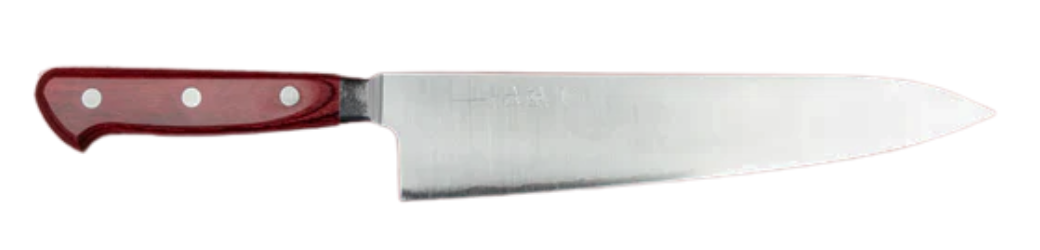
R2 Gyuto 210mm,
Takamura Akagouhan
A “gyuto” is a multi-purpose knife that is especially good at cutting through meat. This one is from Takamura Akagouhan, a company famed for their extremely refined blades and run by a third-generation Japanese blacksmith. It’s no wonder the light and long-lasting R2 is popular amongst pros.
$299
The Most Durable Chef’s Knife for Heavy Use

Classic Chef’s Knife 16cm,
WÜSTHOF
This knife has been part of the German company’s best-selling collection for generations. It is made from a single piece of WÜSTHOF steel, hardened to 58 Rockwell. For an extra bit of flair, you can choose the colour of the handle, including unique shades like lilac and coral.
$190
A Reliable Knife for Everyday Use

Swedish Carbon Gyuto 210mm,
Misono
Made from the highest quality carbon steel, this gyuto will be your new best friend in the kitchen. Misono is a leading Japanese kitchen knife company known for their skilled craftsmanship. Each knife comes hand sharpened by their artisans and is remarkably easy to re-sharpen at home.
$158
Anthony Bourdain’s Favourite Chef’s Knife

G Series Cook’s/Chef’s Knife 20cm,
Global
In his bestselling book, Kitchen Confidential, Bourdain called Global knives “lightweight, easy-to-sharpen and relatively inexpensive,” adding that they also had “the added attraction of looking really cool.” These are made from the finest stainless steel and have hollow handles for excellent grip and balance.
$179.99
More on ELLE Gourmet
- How to Choose the Right Stand Mixer: We break down this appliance’s humble origin story, why it’s now a kitchen essential and our top six picks for the best stand mixer.
- How to Choose the Right Immersion Blender: Toronto-based chef Eva Chin breaks down the most important things to look for in an immersion blender, including the wattage and range of speeds.
- How to Choose the Best Air Fryer: With so many options on the market, make sure you check out our expert-approved tips and a fool-proof performance test that will help you pick the right air fryer.