Ask anyone in Dawson City, Yukon, where to eat and they’ll point you to Bonton and Company. Getting one of the coveted 32 seats (40 when the patio is open) for dinner at the contemporary restaurant is an achievement. Especially during the peak tourism season. Bonton and Company showcases food that is Yukon-grown and Yukon-raised.
In our first issue, we actually spotlighted Bonton and Company as one of Canada’s must-dine-at spots. It has since become an award-winning restaurant with a full reservation list. That all started when owner Shelby Jordan decided to make a career change.
Career Change: From Local Office to Butchering School

After years managing the local office at the Yukon Environmental and Socio-Economic Assessment Board, Jordan craved something new. “I wanted to learn a trade that meant I could work with my hands,” she says. “I was interested in [food], but I didn’t want to go to a culinary school. I was in a tactical frame of mind at that stage of my life—less creative.” She ended up studying butchering in Kamloops, B.C., at Thompson Rivers University.
“What really piqued my interest was understanding the anatomy of a carcass,” she says. “I had an interest in those off-cuts— the cuts that you read about in cookbooks or on the internet that are not your traditional cut. I really dived into just trying to get a full understanding of the animal.”
There were some surprises: She didn’t realize how strong a butcher needs to be, for example. “It’s a tiring profession to be in,” she says. “It is really physically demanding. And depending on which species you’re working with, it can be incredibly complex. Beef is way more complicated to process than pork, for instance, or lamb.”
How Bonton and Company Works with Local Yukon Farmers
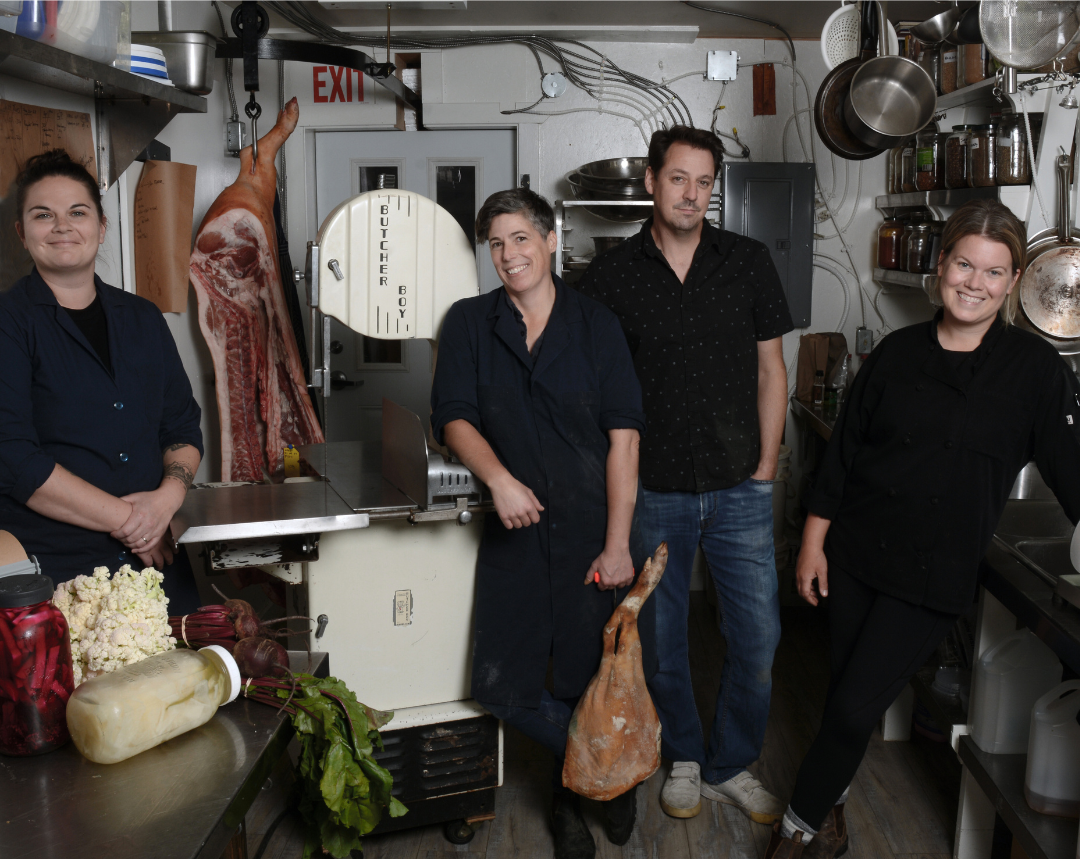
After completing the program, she headed back north and set up a small workshop in her backyard to make sausages, charcuterie and chops for her family and to sell to locals. She made a steadfast commitment to always use Yukon-raised meats in her work. She would become the first butcher in the territory to make traditional dry-cured salamis using only Yukon-raised meats.
“I was looking for closer sources of meat for my family,” she explains. “When I started with butchery, it was specifically to use Yukon-raised meat and to provide for our community.”
At the time, the mid 2010’s, the local-food scene in the Yukon was quiet. “It was pretty rare to be able to get Yukon-raised meats at your grocery store or in a restaurant.” Logistics was the biggest obstacle; for one thing, there was no abattoir in Dawson City.
She slowly developed relationships with a few local Dawson farmers as well as some in Whitehorse and Haines Junction, which, she notes, are 600-plus kilometres away.
“The first shipment of local pork had to come on a freight truck,” she says. “It wasn’t dropped off by the farmer because it had to be inspected. So this gigantic semi-truck backed up to my little shop in the back alley of my house and offloaded Yukon-raised meat. It was a first here in many years.”
That was in 2017. Just six years later, things have changed drastically.
Expanding Customers’ Palates Amidst Growing Curiosity and Demand
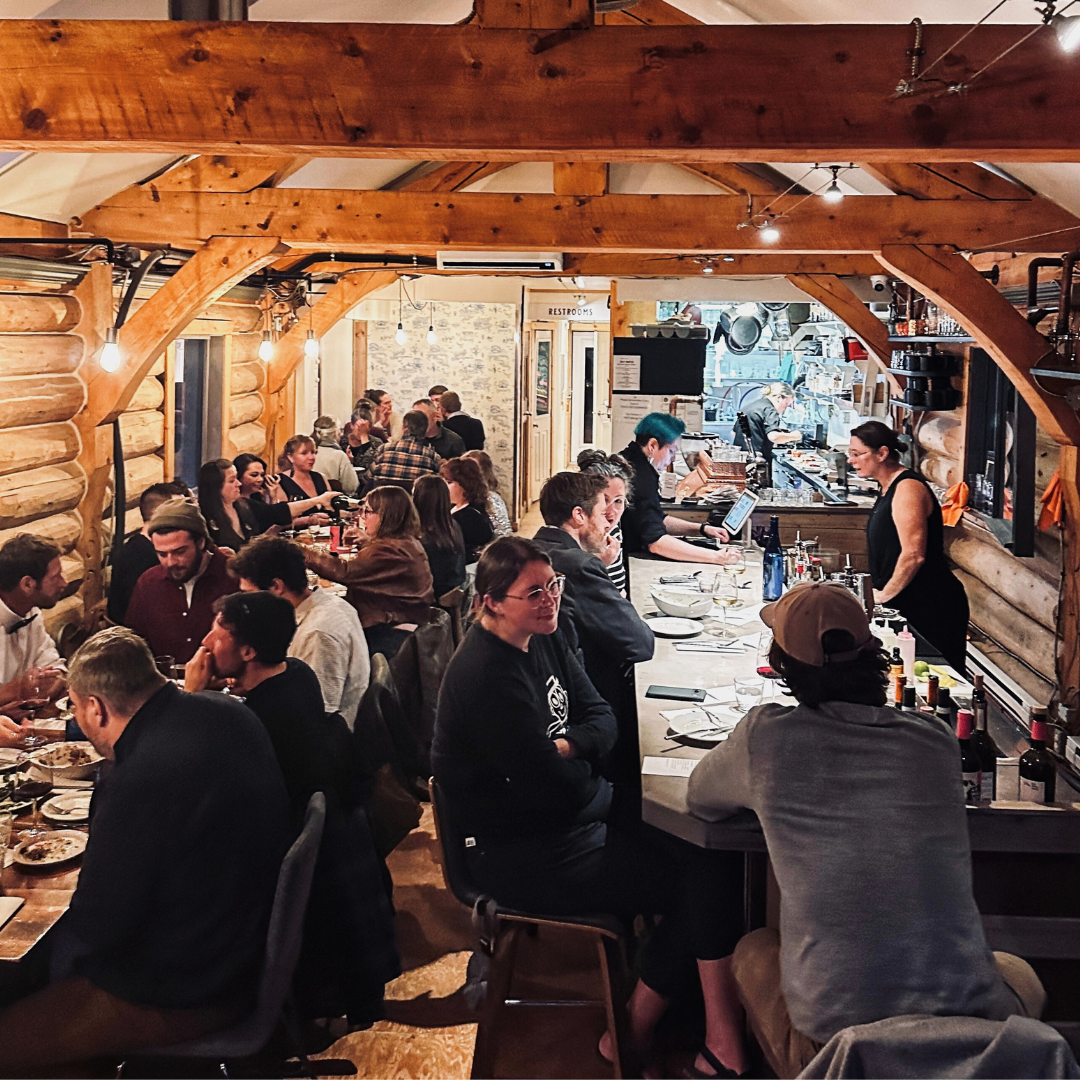
Each year, she says, the number of farms raising livestock grows by a third, and on those individual farms, the number of livestock grows by a third. “It is just building and building and building,” she says. The Yukon government also launched a mobile abattoir to visit farms and slaughter animals, making access to local meats more reliable. “They can’t keep up now.” This year, the territory had three commercial abattoirs open to meet demand.
With a business partner, Jordan opened Bonton and Company in 2020. In 2021, she moved her butchering facilities to the second floor of the restaurant to create one base for all elements of the business.
“There was a time in the industry, with factory farms and mass production, when they were just producing the cuts that were the most profitable and the least grotesque to people,” she says. As a butcher, she uses every part of the animal she has access to; it’s one of her guiding principles.
She has also challenged the chefs and kitchen staff at Bonton and Company to do the same. “One of the [objectives] behind the menus is to use the cuts that people don’t think of,” says Jordan. “And it’s also what appeals to people when they read our menus—butchery cuts that you wouldn’t normally get, like chicken liver.”
Weekly Menus: How Bonton and Company Uses Local Ingredients

Diners might find dishes like mortadella mousse, made with local pork and ricotta and Parmesan from nearby Klondike Valley Creamery. Or goat merguez Scotch eggs, made with Tr’ondek Hwëch’in farm eggs encased in goat merguez sausage. (Dawson City is situated on the land of the Tr’ondek Hwëch’in First Nation.) And they can pick up charcuterie, sausages, bacon and more of Jordan’s handiwork in the shop on-site as well.
Next for her and the team is to do more with what they have by building up Bonton and Company’s preservation program—“not just meat preservation through our salamis but doing way more fermenting, pickling and storing of things,” she says.
The restaurant is open for three meals a day, and the menu changes weekly. That’s partly because what’s in season can quickly change in Dawson City. It sits roughly 250 kilometres south of the Arctic Circle. Bonton and Company is also one of the few eateries open year-round in the small city. She doesn’t want people to get tired of the same few dishes.
“Our chefs, too, would get bored making the same thing day in, day out,” she says. Learning and innovation are motivators for both Jordan and her staff of 14— both out of necessity and because they’re up for the challenge.
More Homegrown Heroes on ELLE Gourmet
- Chef Ned Bell Shares Tips for Sustainable Cooking on a Budget: The B.C.-based chef explains why sustainability is so important to him, and how to buy seasonal seafood for less.
- Behind Kebaonish, an Indigenous and Woman-Led Drink Company: Located on Tyendinaga Mohawk Territory in Ontario, this coffee and tea brand is infused with cultural teachings.
- Canadian Chef Jessica Rosval Uplifts Women Through Cooking: This Montreal-born chef is positively impacting the industry at her not-for-profit and three-Michelin-starred restaurants.